


By Anders Lorenzen
Climate-induced weather impacts have resulted in UK farmers experiencing one of the worst harvests on record, with losses exceeding £800 million.
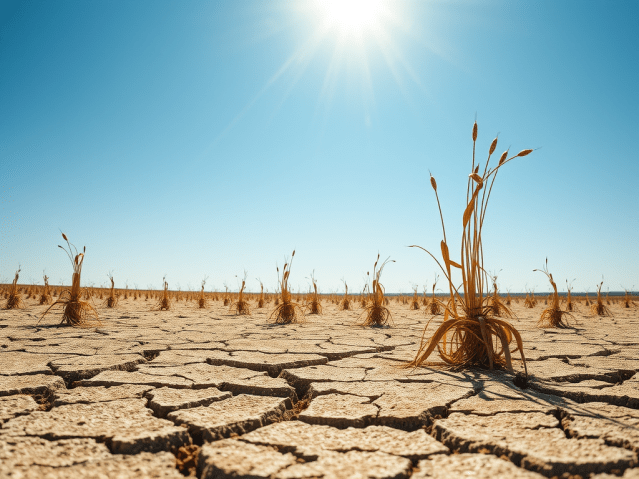
Prolonged drought conditions, as well as long and extensive extreme heat periods, have resulted in the 2025 harvest being one of the worst and most costly records.
The data also pointed towards a clear climate trend, that climate impacts in the UK are worsening the outcomes for UK’s arable farmers as three of the five worst harvests on record have all occurred since 2020, an analysis carried out by the Energy and Climate Intelligence Unit (ECIU).
Extreme drought conditions
Parts of the UK has in 2025 been in a year-long drought, with drought conditions already starting during the 2024/25 winter season due to a drier than normal winter, with many aquifers well below average levels. This was followed by the hottest and driest Spring on record, the hottest summer with widespread drought conditions persisting.
Due to the weather conditions, the five stable arable crops cultivated in the UK: wheat, oats, Spring and winter barley and oilseed rape, declined by 20% compared with the 10-year average.
A struggle for survival
The ECIU analysis found that the climate impacts are putting many arable farmers at the breaking point, and many are struggling to break even. ECIU are calling for more support for farmers, both financial but also in terms of climate resilience schemes.
Loss for arable farmers does not stay with those farmers but also impacts animal agriculture, and many of those stable crops are used to feed livestock. Additionally, it is driving up national food prices, and with the country still grappling with the cost-of-living crisis, this is unwelcome news for many families already struggling to make ends meet.
Adapting to a changing climate
Experts argue that such climate shocks are further warnings that the UK is not immune to climate impacts. The government, as well as farmers and other landowners, should pay a lot more attention to climate adaptation measures and review whether the stable crops grown in the UK should still be grown to such an extent as they are today or whether more climate-resilient variants should be trialled.
For instance, the most grown crop in the UK, wheat, is sensitive to extreme weather events, both in terms of heat and drought, but also to wet weather, though scientists are making some progress in developing more climate-resilient wheat variants.
Anders Lorenzen is the founding Editor of A greener life, a greener world.
Discover more from A greener life, a greener world
Subscribe to get the latest posts sent to your email.
Categories: Agriculture, climate change, environment, impacts, UK, Weather