


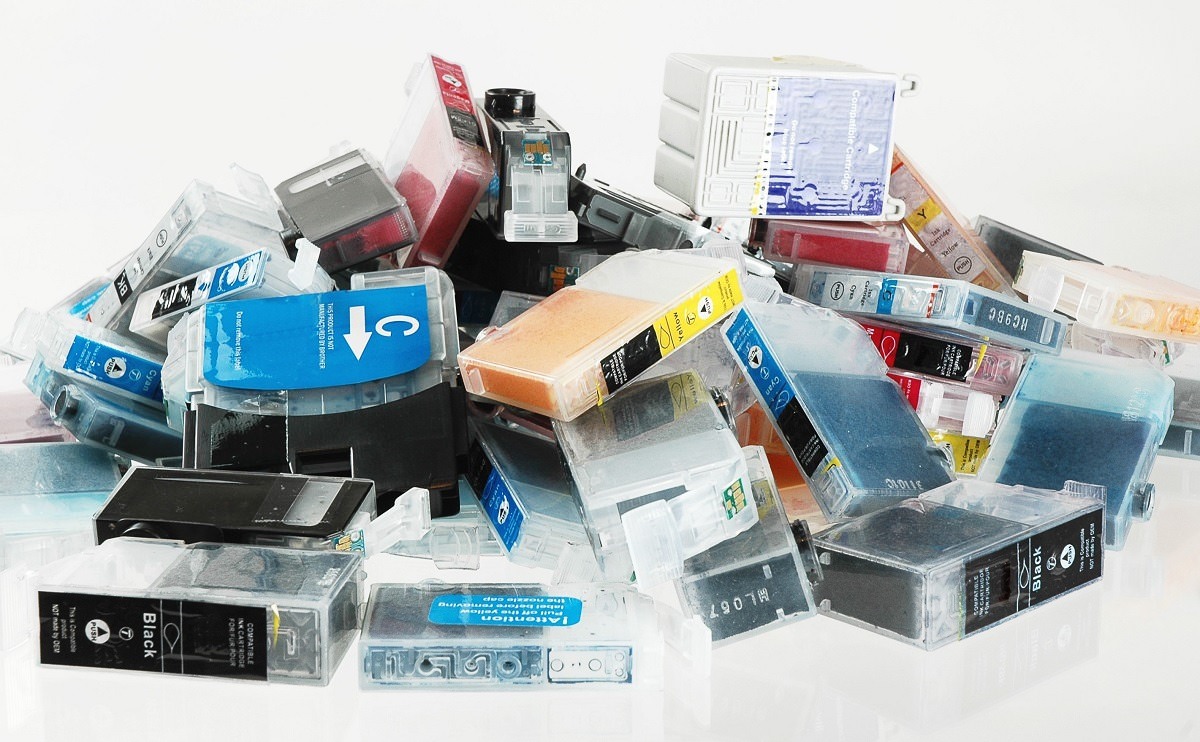
From an environmental standpoint, reusing a product is almost always preferable to recycling it because reuse gives products a second life without consuming additional manufacturing resources. However, companies have been promoting recycling rather than the reuse of a single consumer product for years. That product: printer cartridges.
The urgency of cartridge reuse and recycling cannot be overstated. North America uses approximately 400 million ink and toner cartridges annually, and more than 375 million are thrown away each year—that’s more than 1 million cartridges per day. Globally, billions of cartridges are used annually, but less than 30% are recycled.
Ink cartridges can take 450 to 1,000 years to decompose in landfills. During that time, the ink and the heavy metals it contains can leach into soil and groundwater, harming ecosystems and potentially affecting human health.
By choosing to refill when possible and recycle responsibly when refilling is no longer viable, you’re keeping these materials in productive use and out of landfills. Congratulations, you’re a member of the circular economy.
There’s Money In Them Thar Cartridges
Ink cartridge recycling is big business. You can actually make (or save) a significant amount of money by recycling the cartridges rather than reusing them. Consider:
- Staples offers $2 back in Staples Rewards per cartridge when you’ve spent at least $30 on ink or toner in the previous 180 days, with a limit of 10 to 20 cartridges per month depending on membership tier.
- Best Buy provides a $2 coupon toward your next ink purchase of $40 or more for each cartridge recycled, limited to three items per household per day.
- Office Depot/OfficeMax gives $2 back in rewards per recycled cartridge (up to 10 per month) when you make a $10 qualifying purchase in the same month.
But why can you make more per pound recycling ink cartridges than aluminum cans? One reason: If you recycle your ink cartridges, the manufacturer can be sure you’ll purchase new ones.
Manufacturer-Led Recycling
In most industries, manufacturers don’t get involved in end-of-life solutions unless legislation forces their hand (for example, bottle bills and e-waste laws). In the printer cartridge market, every major manufacturer offers free take-back programs and even covers the postage. They also partner with the retailers mentioned above to make it easy to drop off used cartridges.
HP’s Planet Partners program is one of the largest, using a closed-loop recycling process where plastic from empty cartridges is used to create new Original HP cartridges. In 2024 alone, HP reports that nearly 37 million print cartridges were returned through the program, with 90% of toner cartridge materials recovered and recycled into other products, and zero are sent to landfill. HP also handles recycling for Samsung toner cartridges, but does not accept refilled, remanufactured, or third-party cartridges.
Canon’s recycling program was the first manufacturer take-back program, launched in 1990. Canon has collected more than 454,000 tons of cartridges worldwide through the program. You can drop off Canon inkjet cartridges at over 1,600 FedEx Office locations free of charge, or print a prepaid UPS return label for toner cartridges from Canon’s website.
Epson’s Product Stewardship Program accepts cartridges at participating retail drop-off locations or by mail, with prepaid FedEx shipping labels available on its website.
Brother offers free mail-in recycling. Just print a prepaid Smart Label from your Brother account, pack your cartridges, and drop them at any USPS location.
But what if you’re considering remanufactured cartridges or want to refill them yourself? Here’s HP’s official stance:
“37% of tested refilled ink cartridges failed during use or right out of the box. Original HP ink cartridges worked every time … When tested, refilled ink cartridges offer no cost per page advantage over Original HP ink.”
The statement was based on a 2014 study commissioned by HP, which is no longer available online. What it doesn’t mention is that remanufactured cartridges can be significantly cheaper. So, reuse remains a viable, even money-saving alternative to cartridge recycling.
Cartridge Durability: How Many Times Can You Refill?
One of the most common questions about cartridge reuse is how many refill cycles you can expect. The answer depends on cartridge type and care.
Inkjet cartridges can typically be successfully refilled multiple times, often ranging from three to seven refills. However, cartridge components may wear out over time, affecting print quality. The original equipment manufacturer (OEM) designs these units for single use, so results vary. Some users report getting a dozen refills from a single cartridge with proper care.
Toner cartridges have a shorter reuse window. Most laser toner cartridges can be refilled only 2 or 3 times before they need to be replaced due to drum wear and other mechanical degradation.
A crucial tip for inkjet users: Avoid letting the cartridge run out of ink completely before refilling. Once the inkjet sponges dry out, they cannot be refilled. The best way to ensure your cartridges have a long life is to print regularly so they don’t dry out, and refill before they’re completely empty.
The Environmentally Preferred Choice
Reuse your ink cartridges when possible. But there are a few things to keep in mind if you aren’t buying OEM cartridges:
- Some printer manufacturers, such as Epson and Lexmark, will void your printer warranty if you use non-OEM ink in their cartridges.
- Some Lexmark cartridges were designed to prevent refilling, something the Supreme Court ruled illegal in 2017.
- Print somewhat regularly—at least once every couple of weeks—to keep cartridges primed and prevent clogging.
Where to Get Cartridges Refilled
The landscape for in-store cartridge refilling has changed significantly in recent years.
Costco discontinued its in-store ink cartridge refill service in February 2021, citing a steep decline in demand due to digital photography and cloud storage reducing the need for printing.
Walgreens has also scaled back its refill services. While some locations may still offer refills at their photo counters, availability varies—call your local store to confirm before visiting.
Current refill options include:
- Cartridge World franchise locations continue to offer professional refill services
- Independent print shops in many communities provide cartridge refilling
- DIY refill kits are available at office supply stores and online retailers
DIY Refilling Tips
If you choose to refill cartridges yourself:
- Buy a printer cartridge refill kit designed for your specific cartridge type
- Wear rubber gloves to protect your hands from permanent ink stains
- Cover your work surface with newspaper or paper towels—ink is messy
- Locate the refill holes (often under a label) and inject ink slowly using the syringe included in your kit
- Avoid overfilling, which can cause leaks and poor print quality
- Clean the refill syringe after each use
- Reseal the cartridge properly before reinstalling
Keep in mind that DIY refilling works best with OEM cartridges, and results can vary. If print quality declines significantly, it’s time to recycle the cartridge rather than refill it again.
How to Prepare Cartridges for Recycling
Whether you’re dropping off at a store or mailing cartridges back, proper preparation ensures they can be processed effectively:
- Turn off your printer before removing cartridges to avoid electrical shock.
- Handle carefully to prevent spills or toner dust release; when handling toner cartridges, consider wearing gloves.
- Package properly: Place cartridges in a sealed plastic bag, anti-static bag (for toner), or their original packaging. Wrap each cartridge individually to prevent leaks during transport.
- Store correctly before recycling: Keep in a cool, dry environment away from heat and direct sunlight.
- Keep cartridges in good condition: Damaged cartridges cannot be remanufactured by recyclers.
Important: Most recycling programs do not accept damaged or leaking cartridges. Store them in leak-proof containers until you’re ready to recycle.
Third-Party Recycling for Cash
If you’d rather receive cash instead of store credit, several services will pay for qualifying cartridges:
- InkRecycling.org offers cash payment for qualifying cartridges with free shipping labels
- eCycle Group works with businesses, schools, and nonprofits, offering cash payments or charitable donations
- TonerConnect buys unused toner cartridges (not empty ones)
If You Decide to Recycle
Most ink cartridges accepted by non-manufacturer mail-back programs will be turned into remanufactured cartridges. So, if you want to make money by recycling or just support the circular economy, consider buying remanufactured ink cartridges.
Use Earth911’s recycling locator to find ink cartridge recycling options near you. Enter your ZIP code and material type to see drop-off locations, mail-in programs, and other options in your area.
Editor’s Note: Originally published on August 1, 2018, this article was substantially updated in January 2026.