


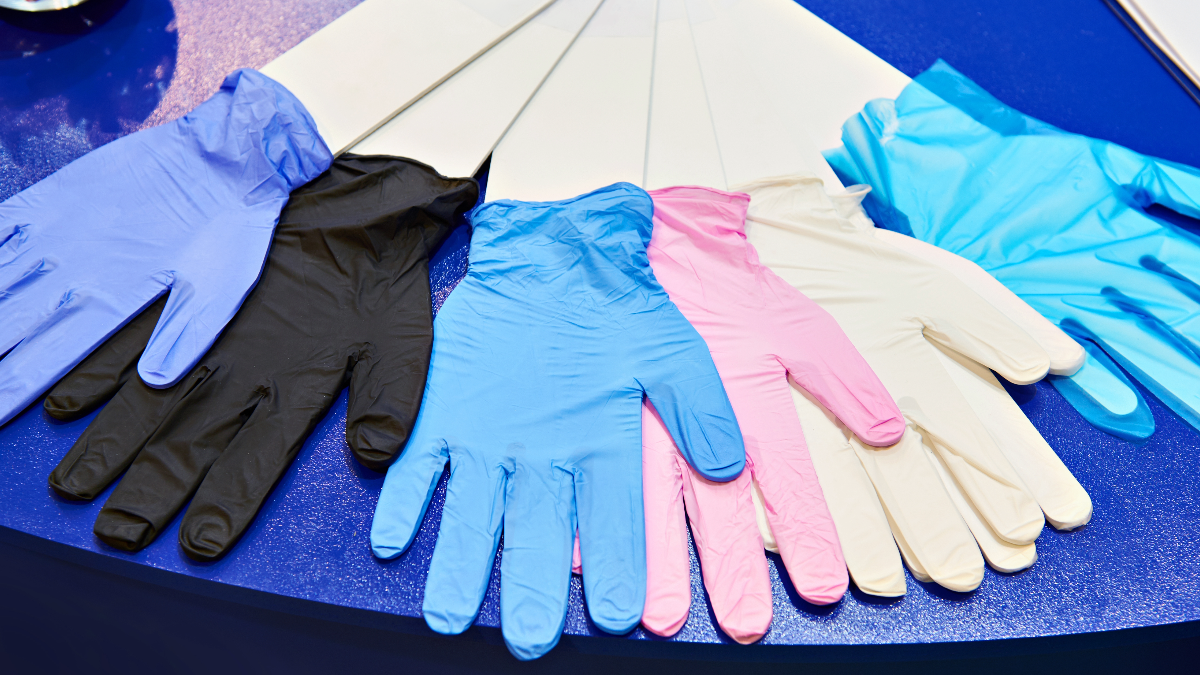
Nitrile, vinyl, and latex gloves are staples in the medical world and remain common in everyday life since the pandemic. They are not biodegradable and will endure for decades or longer in a landfill. Learning how and where to recycle them can help turn more single-use gloves into downcycled products, such as curbside recycling bins or park benches.
Disposable gloves should not go in your curbside recycling bin. They can get tangled in sorting equipment at recycling facilities, and the potential for contamination with bodily fluids makes them unacceptable for standard recycling streams. Instead, use the mail-in and manufacturer recycling programs described below.
Gloves contaminated with medical waste, such as blood or bodily fluids, are a form of hazardous waste that should be sent to a local hazardous waste facility. Your community may have a specific program for medical waste; if not, a hazardous waste station will do the trick. These gloves will not be recycled and are typically burned to prevent contamination of landfills.
Before recycling, try reusing your gloves to make them last longer. For many years, it was assumed that sterile gloves cannot be reused without risking contamination. A 2021 study by the University of Waterloo in Ontario, Canada, found that a pair of gloves can be used up to 20 times with proper disinfection. Alcohol, ultraviolet light, or heat treatments can be applied to the gloves between uses to make them safe.
Know Your Gloves
Three types of “rubber gloves” are used in healthcare, janitorial, and other jobs that require protection against infection or abrasive, caustic cleaning products. The different types of gloves cannot be recycled together, so be careful to separate them.
Nitrile gloves, which are the most used, accounting for about 41% of gloves sold, are the most recyclable.
Latex gloves made from rubber are outwardly better for the environment than nitrile gloves made from oil, but latex recycling is not widely available. If you choose latex gloves, look for a glove manufacturer that offers recycling services, a “closed loop” solution to your recycling needs. Between eight and 12 percent of the population is allergic to latex, making these gloves a less popular choice.
Vinyl gloves are made from PVC, or #3 plastic, which is not reliably recycled and can contaminate other types of plastic during the recycling process. Vinyl is also a recognized health hazard and has been banned in some countries. They contain phthalates, which can enter the body through the skin and are known to cause cancer. Many healthcare systems avoid using vinyl gloves.
Recycling Options
For Individuals and Small Businesses
TerraCycle is the only program that accepts any brand of disposable gloves, without requiring separation by type, including nitrile, latex, vinyl, polyethylene, or PVC gloves. TerraCycle offers several options scaled to different volumes of glove waste:
- A Zero Waste Pouch for $34, ideal for individuals, salons, and small offices.
- Zero Waste Boxes in small, medium, and large sizes with prepaid UPS return labels.
- Zero Waste Pallets for high-volume facilities (return shipping not included).
All gloves must be non-hazardous — free from visible blood, heavy soiling, or contamination with infectious, toxic, or corrosive materials. TerraCycle sorts collected gloves by material type at its recovery facilities and processes them into raw materials for use in new products.
Manufacturer Recycling Programs
Several glove manufacturers offer recycling programs for their own products. These programs generally require institutional participation and accept only the manufacturer’s brand of gloves.
Fisher Scientific’s RightCycle Program is the first large-scale, manufacturer-led recycling effort for non-hazardous PPE. The program accepts used Kimberly-Clark Professional nitrile gloves, protective clothing, safety eyewear, and flex-film packaging. There is no cost to participate, but customers pay shipping to the nearest RightCycle facility. Facilities collect eligible products in labeled bins, box them on a pallet, and ship when full. The materials are sorted and processed into plastic pellets used to manufacture consumer goods like park benches, bike racks, and flower pots. Since launching in 2011, the program has diverted more than 1,500 metric tons of waste from landfills across nine countries. Only Kimberly-Clark Professional products are eligible.
Medline’s GreenSmart Recycling Boxes are available to Medline glove customers and accept non-hazardous nitrile, vinyl, and latex gloves. Each prepaid box holds approximately 5,000 gloves. Note that Medline’s program is a waste-to-energy initiative — collected gloves are incinerated at waste-to-energy plants to produce clean energy rather than being mechanically recycled into new materials. It diverts gloves from landfills, but it is not a circular recycling solution.
Canadian Options
EPI Canada, a medical products distributor, offers seven sizes of glove collection containers — from a postage-paid envelope to pallet-scale bins — for recycling latex, vinyl, and vinyl-nitrile gloves. Each container includes a prepaid return label and instructions. EPI Canada also offers mixed PPE recycling boxes that accept gloves, masks, gowns, and face shields in the same container. No products soiled with blood or biological fluids are accepted.
Go Zero Recycle, based in Magog, Quebec, provides a full circular-economy recycling solution for nitrile, vinyl, and latex gloves used in medical, industrial, food preparation, and personal use. Their labeled recycling boxes come in multiple sizes with prepaid UPS Carbon Neutral return shipping. Go Zero provides recycling certificates and traceability through their RealCycle program.
Community and Institutional Programs
Community-organized glove recycling programs, which are volunteer-staffed, are springing up at university and private laboratories. For example, the California NanoSystems Institute at the University of California Santa Barbara has launched a laboratory glove recycling initiative that will share information with other organizations. Many university labs also participate in the Kimberly-Clark RightCycle program through institutional agreements.
Editor’s Note: This article was most recently updated in February 2026.