


Regina is haunted by the specter of mold.
She found the insidious spores in the closet, behind the refrigerator, and around the bathtub for two years after the dishwasher flooded her apartment in Asheville, North Carolina.
The infestation only got worse after Hurricane Helene. Rainwater rushed into her son’s third-floor bedroom at the Evergreen Ridge Apartments through gaps in the window frame, warping and discoloring the wall. After the 2024 storm, faint brown spots dotted the panes, and the trim appeared loose. When the A/C went out last summer, she worried the mess would spread in the hot, humid air. Her son has had allergic reactions to mold before, including itchy eyes and coughing, and the threat of it happening again kept her up at night. She scrubbed the apartment weekly, only to watch the spores creep back. As a single mom who works long shifts as a nurse, she felt she couldn’t keep up with the creeping damage.
“My cabinets are falling apart,” she said. Regina, who asked that her real name not be used for fear of repercussions, walked through her bathroom, pointing out where the damp persisted. “You can touch it,” she said. “It falls apart. And that’s from water damage, obviously.”
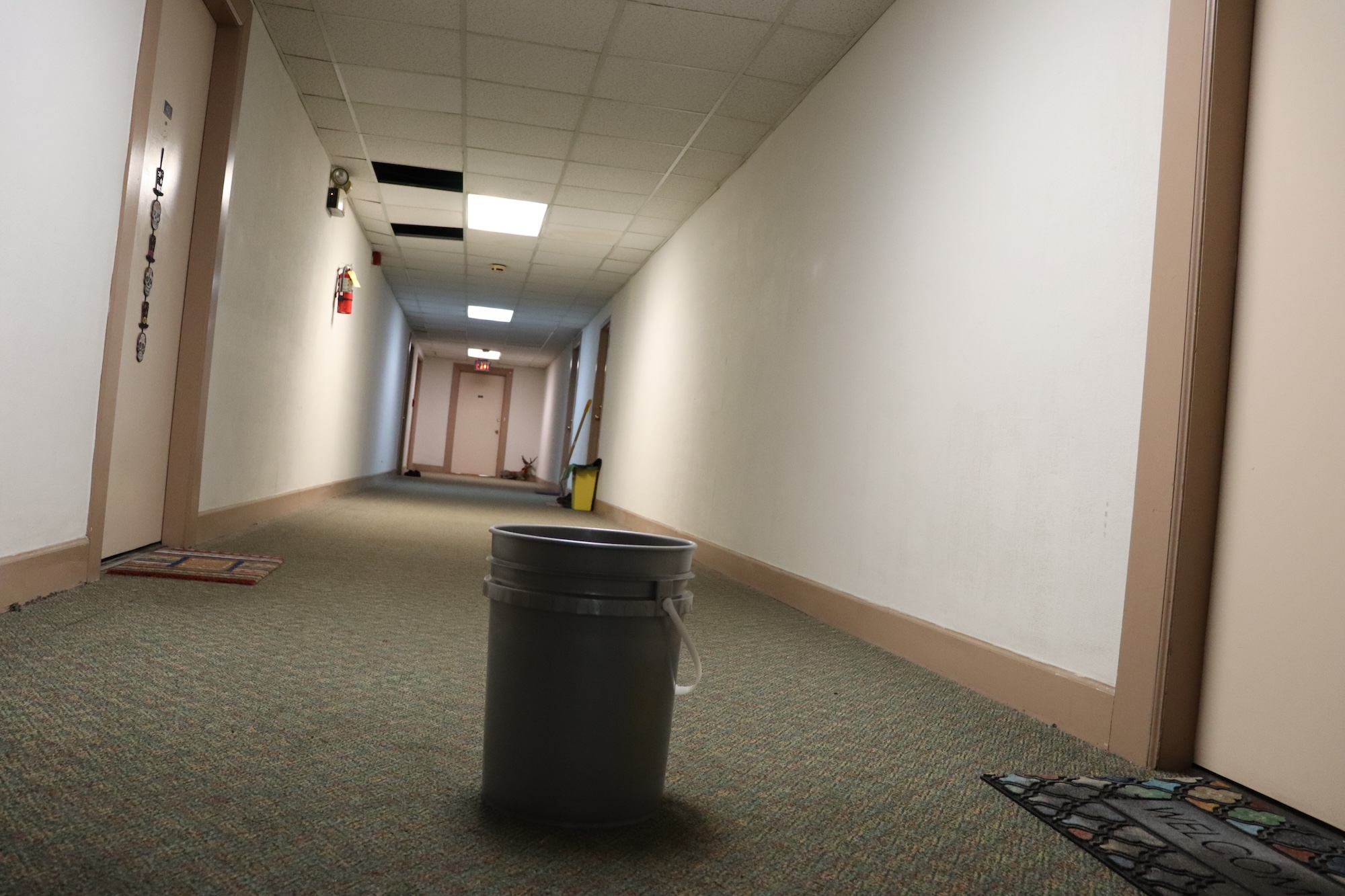
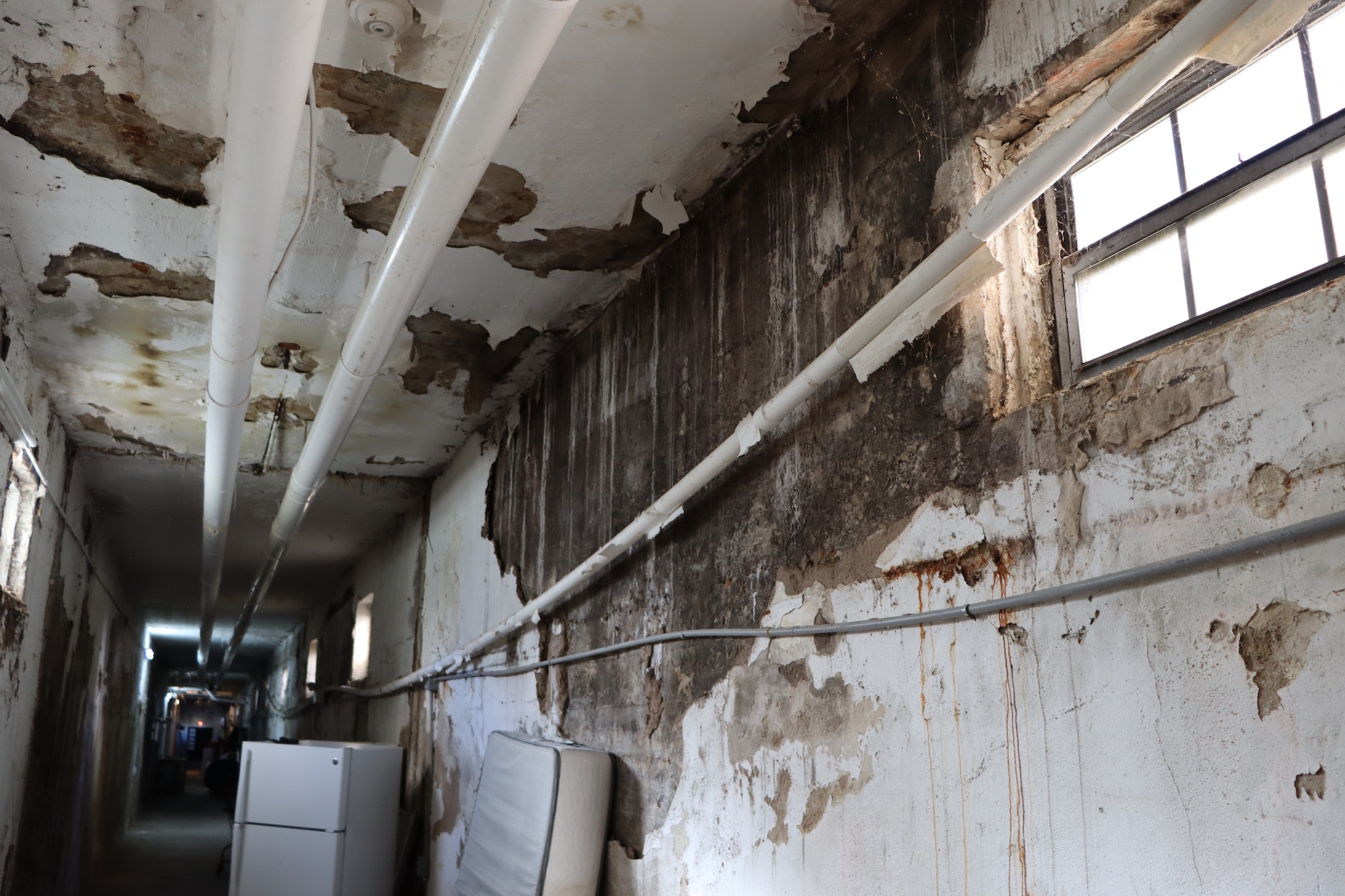
Signs of mold and water damage permeate the complex, which is nearly a century old and once housed a Department of Veterans Affairs hospital. Tenants attribute a lot of it to leaky pipes, but Helene made things worse. Though the complex was on ground high enough to avoid inundation, tenants said Helene’s more than 12 inches of rain poured through windowsills facing the west. The walls of a utility hallway were black and crumbling, a condition, tenants said, that predated Helene, but may have worsened since. Same with the ceiling in the lobby, which sagged under the weight of water damage. An overpowering, musty smell permeated the building and wafted into the apartments. There are three large buildings in the complex, where many apartments are rented by the elderly, those with disabilities, and families with young children.
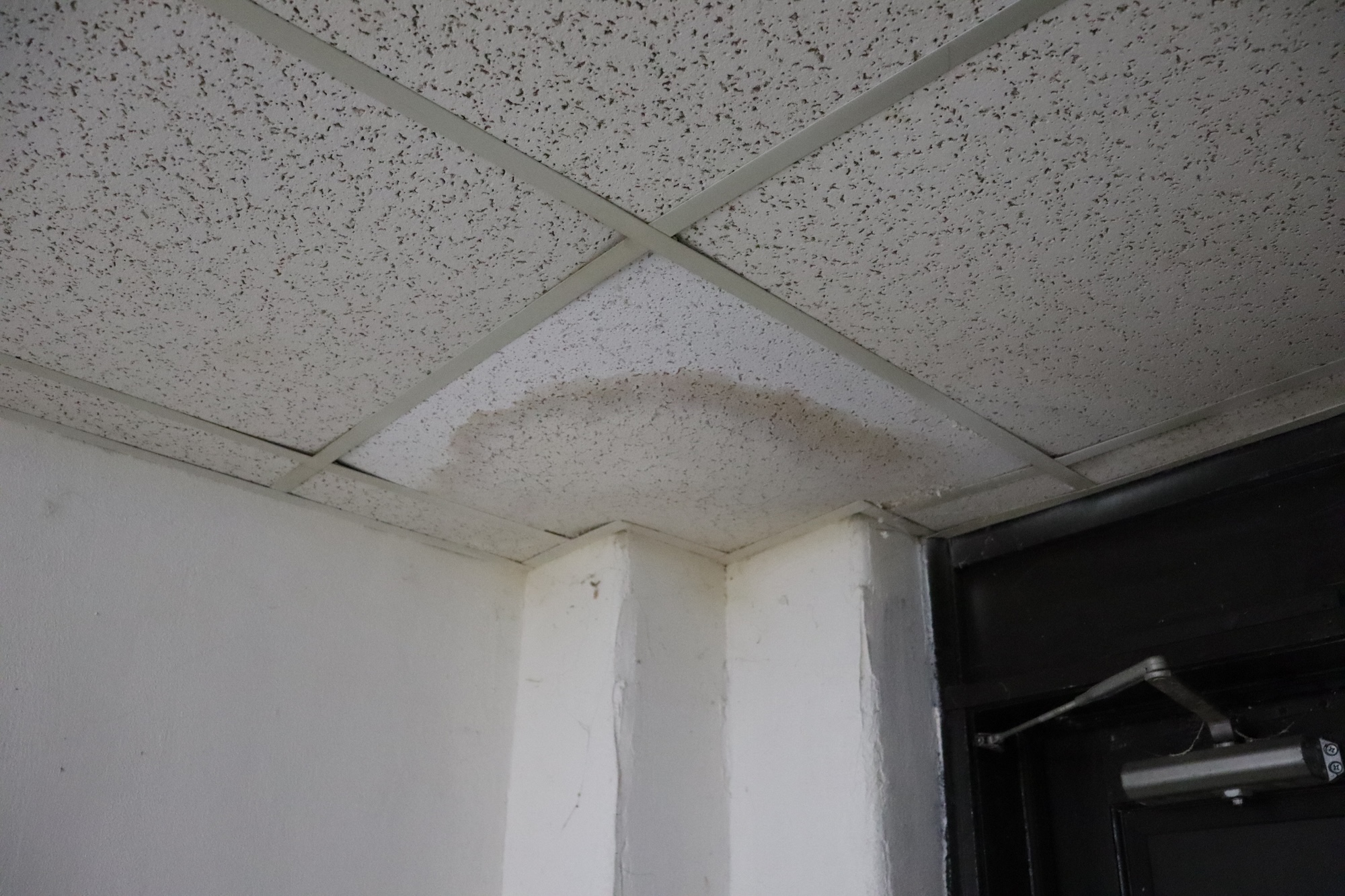
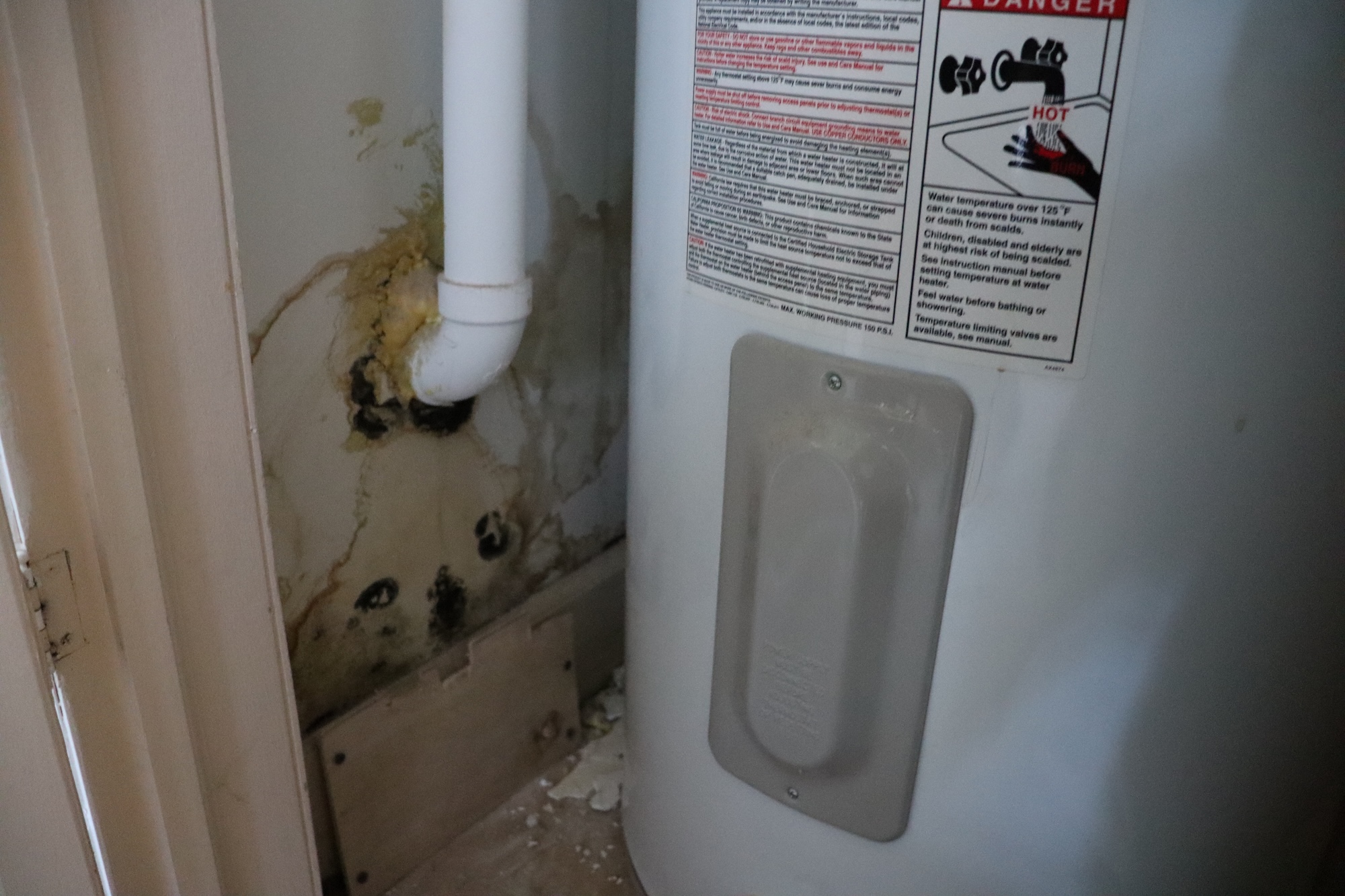
Regina’s apartment and floor show signs of leaky pipes and water intrusion – a common problem in aging rental housing throughout the Southeast. Laura Hackett / Blue Ridge Public Radio
A property manager at the complex declined to comment, and its owner, Shadow Ridge Associates, did not respond to multiple requests for comment.
Mold is a type of fungi, which are moisture-loving in general and thrive in the kind of heat and lingering dampness residents of Evergreen Ridge describe. Outside, these organisms tend to be harmless. Black mold lives in the soil beneath our feet; spores float unnoticed through the air. But when mold infiltrates homes, it thrives in conditions many people find ideal — temperatures between 60 and 80 degrees Fahrenheit and relative humidity above 70 percent.
In the wake of the rains and floods that have repeatedly inundated the Southeast, mold is growing harder to avoid and harder to eliminate. Climate change and the impacts it brings — heavier precipitation, frequent flooding, and increased heat and humidity — are creating the perfect petri dish for mold to thrive, exposing more people to its health impacts.
Despite its prevalence, mold receives shockingly little study. It is expensive to fix, largely untracked as a public health issue, and subjected to building codes and housing safety regulations that lag behind a problem that is no longer confined to the aftermath of disasters. As mold’s ideal conditions grow more prevalent, it remains a big gray area in public knowledge, and both state and federal policy.
Regina’s health concerns finally prompted her to break her lease in December. She’s spending more than she’d like on a new place, but said the peace of mind is worth it.
IIn the aftermath of Hurricane Helene, Duke University scientists saw a chance to fill some of the gaps in what we know about mold. The team, calling itself the Duke Climate and Fungi Research Group, or CLIF, went through flooded buildings in Black Mountain, North Carolina, a small town outside of Asheville, collecting air samples and scraping residue from walls. Floodwaters had reached 27 feet and left a mist that settled into homes and workplaces when they receded. Residents soon began reporting headaches, coughing, and respiratory problems.
Researchers often encounter common indoor molds like penicillium or aspergillus after a flood, but there are innumerable species, and their impacts on human health vary widely. The organisms produce a variety of chemicals. Some, called mycotoxins, remain stable in the environment, while others, known as volatile organic compounds, or VOCs, disappear quickly. Both can affect the human body, including the lungs, liver, and kidneys, but VOCs have been the subject of less study.
How mold affects people depends on more than just the species. It also varies with how much is present and how well-ventilated the space is. Someone’s preexisting conditions also shape their response. For most healthy adults, mold may cause mild symptoms, but for children, older adults, and those with respiratory issues or compromised immune systems, mold-related irritation and infection can be serious and persistent.
“For people with chronic respiratory illnesses or conditions like asthma, substances produced by fungi may worsen their symptoms. That’s what we’re trying to understand,” said Asiya Gusa, a microbiologist at Duke University studying the problem with CLIF.
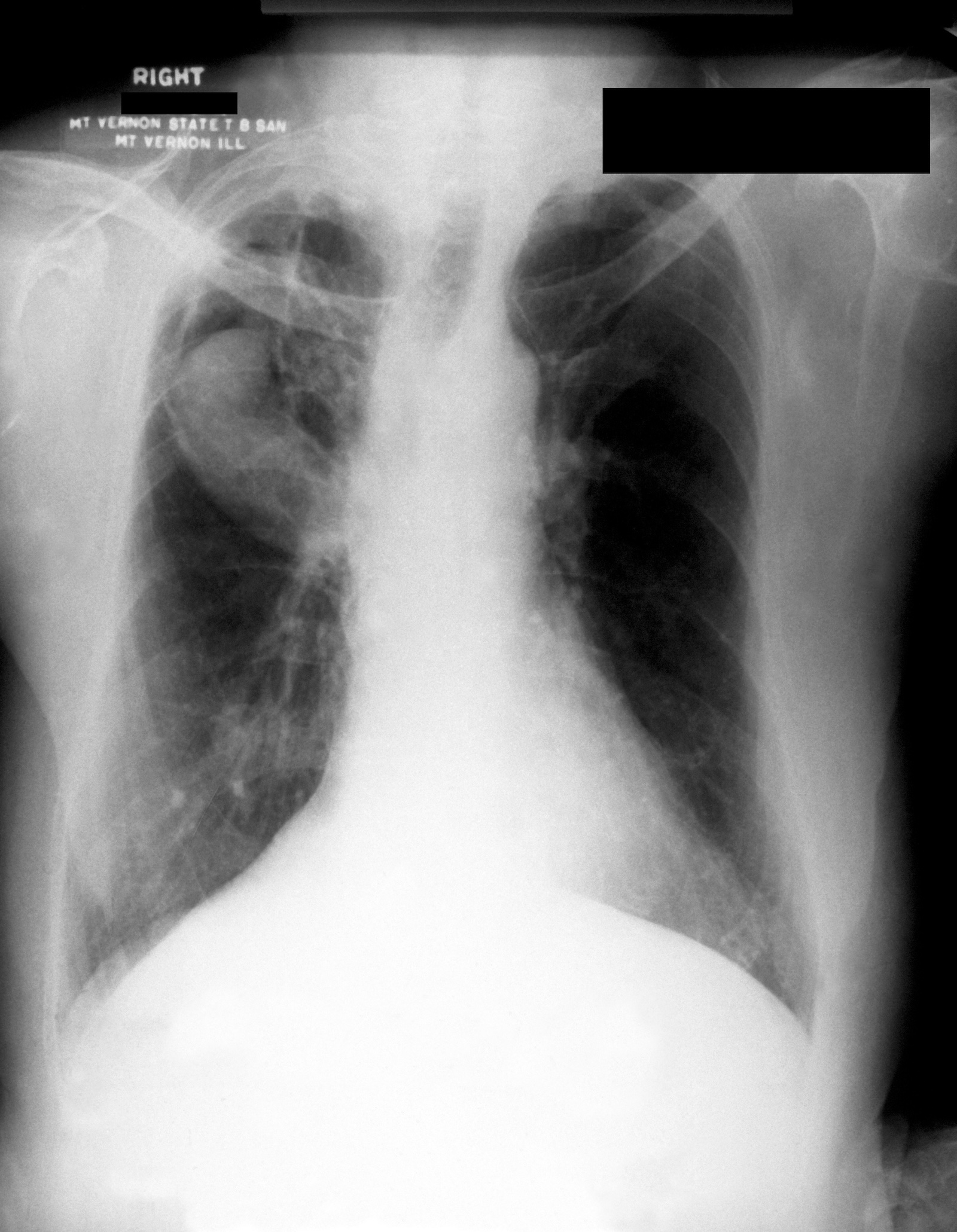
Smith Collection / Gado / Getty Images
Environmental factors beyond temperature also play a major role. It’s not just heat that aggravates mold — it’s flooding itself, according to Gusa. What once grew on riverbanks, in trees, and other outdoor locations can now be found indoors.
In addition to her work with Helene, Gusa is also studying long-running accounts of conditions like “Katrina cough,” a suite of respiratory symptoms that include a runny nose and dry cough that Louisiana residents began reporting after Hurricane Katrina.
Understanding the full, moldy picture requires more than expertise in microbiology. It also takes engineers and architects to understand how mold affects structures and test mold-resistant building materials while others analyze fungal DNA and chemical emissions. That’s why the CLIF team takes a multidisciplinary approach and includes engineers and architectural experts. “For scientists,” Gusa said, “we have, like, tunnel vision.” By working together, the team can connect the dots between flooding, building conditions, fungal growth, and human health — an approach that a single-discipline study could easily miss.
Gusa said the team is still studying the fungi the CLIF team found in Black Mountain. So far they’ve identified 65 species, from common varieties often found in water-damaged environments like aspergillus to more mycotoxic examples like Penicillium citrinum. The next step, she said, is to determine if the species are in fact as dangerous to human health when they grow on different building materials. “We plan to test whether these ‘opportunistic fungi’ are resistant to antifungal drugs used to treat disease,” she added in a follow-up email.
The results of those tests could provide a better idea of the threats mold poses to human health and the role climate change might play in its propagation. When Gusa studied cryptococcus — which can infect the brains of the severely immunocompromised — in the past, she found that the heat threshold for the fungus was rising. “Their ability to change their DNA to adapt was much higher when they encountered higher temperature,” Gusa said.
Translating these findings into public health guidance will be the next challenge. Agencies like the Environmental Protection Agency acknowledge general risks, but questions about which molds cause which health effects — and under what conditions — remain difficult to answer.
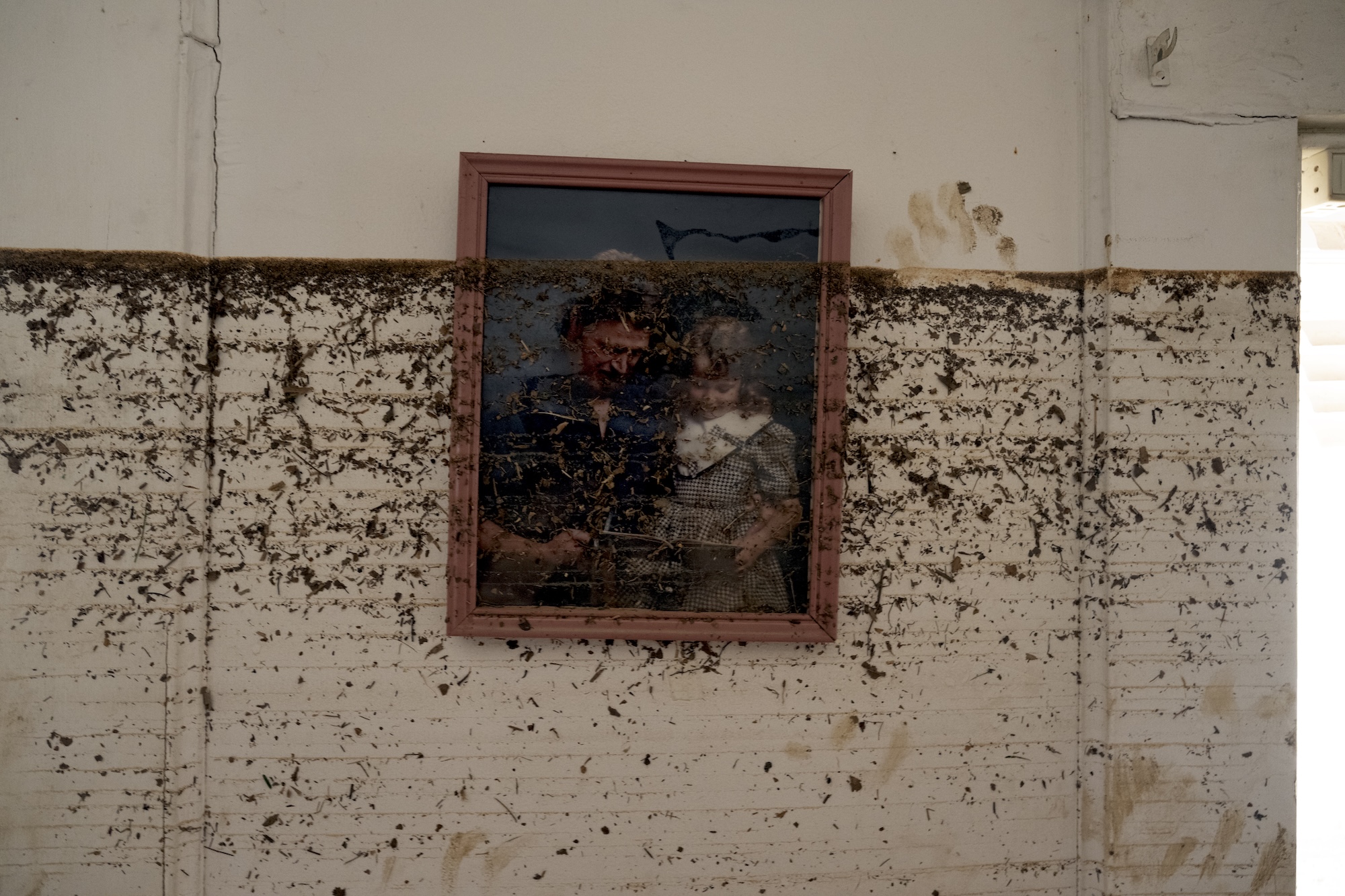
Marvin Joseph / The Washington Post via Getty Images
Part of the problem is that mold’s health impacts are difficult to track. Fungi aggravate preexisting conditions and cause what are known as nonspecific symptoms like itching, sneezing, and coughing that can be hard to pinpoint and monitor. In other words, mold doesn’t cause a specific disease that health departments can easily track, said Virginia Guidry of the North Carolina Department of Health and Human Services. People like her can only watch for increases in the respiratory ailments, infections, allergies, and other ailments that mold can exacerbate.
“We don’t actually have a great way to track mold cases because those symptoms are fairly non-specific, and it doesn’t often send people to either the doctor or to the emergency department,” Guidry said. A study by the Centers for Disease Control and Prevention found that mold-related symptoms show up most often in people who already have breathing problems. Among those studied, about 3.5 out of every 10,000 people with private insurance and 8.5 out of every 10,000 people on Medicaid reported mold-related symptoms.
Some residents of Evergreen Ridge Apartments report persistent sinus problems and other respiratory symptoms. Those who can afford to move have. But in a state like North Carolina, where legal protections for renters are limited and affordable housing is scarce, many people have nowhere else to go. One Evergreen resident, Dana, said she wakes up every morning with congestion, something she began experiencing after moving in three years ago. It started occurring nightly after Helene, and she regularly coughs up mucus each morning.
“I don’t want to have to wake up every day like that,” said Dana, who asked that her real name not be used for fear of repercussions from her landlord.
Asheville remediation expert Dylan Hunt, who works for a company called Green Home Solutions, has seen extreme weather cause an explosion of household mold. After Helene, he saw black mold appear in places it hadn’t before. Even minor flooding can trigger growth within 24 to 48 hours if it isn’t cleaned up immediately — and when water damage goes unnoticed, mold can continue spreading for months. Depending on how much water a home takes on and how humid it stays inside, spores can spread throughout an entire house within weeks, turning what might have been a small cleanup into a much larger problem.
The crisis grew worse over the summer. The region saw a long stretch of hot, humid weather, including Asheville’s hottest July on record (tied with the summer of 1993). Homes that hadn’t experienced flooding started smelling musty, and Hunt’s phone began ringing with complaints of damaged furniture, headaches, and coughs. Drainage pathways shifted after Helene, changing how water moves through the area. Now even light rain can cause water intrusion in some homes.
“Water’s hitting homes in places where it hasn’t hit before,” Hunt said. “A lot of homes, especially the lower levels of homes, will just erupt in a coating of white, fuzzy mold.” Because the damage isn’t always immediate or visible, some people wait months to respond. By then, what might have been a $5,000 cleanup might have grown into a $30,000 remediation project — a frightful amount of money, especially when insurance isn’t always an option. Most companies won’t cover the problem unless it’s the result of a “covered peril” like a burst pipe.
Despite mounting costs and health concerns, mold remains largely unregulated. The EPA does not have an exposure limit, so there’s no federal support for mold testing. Instead, states are left to decide how seriously to take the problem — with about 15 setting their own standards.
That lack of oversight can leave renters with few options. For some, it can even mean starting over. When Helene flooded the three-bedroom house they rented near the French Broad River, Ginger and Amanda Simmons packed up and left. More than a year later, their search for a home has become a frustrating cycle of hope followed by doubt. Many of the rentals they have toured show signs of water damage — a particular concern because their 8-year-old daughter is sensitive to mold and has a history of respiratory problems. In several cases, a place smelled musty or affected their breathing within 20 minutes of being inside.
“I’m nervous to get a rental out here because at this point so many of these houses have had water damage,” Ginger said. “I just don’t know if the owners will disclose it, or fix it, or even know about it.”
When remediation is delayed, incomplete, or simply does not occur, tenants are often left with few options. In North Carolina, the main recourse is to request, in writing, that the property owner address the problem. Turning that into a repair is often an uphill battle, said David Bartholomew, an attorney with Pisgah Legal Services in Asheville.
Because of the high cost, property owners are sometimes reluctant to address the problem, especially in the absence of enforcement.
For renters, requesting a repair means asking a landlord to incur serious expense — and because there’s no federal mold exposure standard, not every state or municipality is ready to back renters up when that happens.
Bartholomew guessed that there are “easily thousands of people” in Western North Carolina who have had mold issues exacerbated by Helene. Since last spring, he’s seen a 35 percent increase in mold-related legal cases from residents throughout the region. The lack of state and city laws overseeing mold places a heavier burden on tenants seeking remediation, he said.
Tenants must show that a landlord has a duty to rectify the problem, and prove who is at fault, he said. They must also document harm, often with expert testimony about the type of mold involved and medical records showing health impacts and costs. “That can be difficult,” he said.
For tenants living in moldy homes, the risk has become a worry somewhere between bills, work, and life’s other demands, one that grows insidiously with time. As heavier rains and longer stretches of hot, humid weather settle into the South, that mold is becoming less an isolated household problem and more a predictable consequence of a changing climate — one advancing faster than the protections meant to keep pace with it.