


When then 31-year-old Brazilian culinary student Letícia Dias walked into Eleven Madison Park on a Sunday evening last August, she had no idea a meal was about to change her life. A longtime vegan, it was her first time dining at the world-class New York City luxury restaurant, which in 2021 made the bold move to ditch meat and dairy and offer a fully plant-based menu. When her lips met the deceptively simple-looking corn velouté, something new clicked between her taste buds and brain.
“I drank that, and I was like, ‘Oh my God. This is insane,’” Dias recalled. “Like, I understand why this is different than other places that I’ve been to.”
It wasn’t just the food that made the dinner unlike any she’d ever had. It was also the ambience and level of personal attention — the mid-meal tour of the famously quiet kitchen, the waitstaff appearing seemingly from nowhere to refill her water glass between sips, and the stories that accompanied each dish down to the ingredient.
Eleven Madison Park, also known by its initials, EMP, has long been considered a bucket list destination for serious foodies. In 2017, it appeared at the top of a list of the world’s 50 best restaurants. After it dropped meat and dairy, it became the first restaurant in the world to be awarded three Michelin stars for a fully plant-based menu. For vegan cooks in training like Dias, who does not want to work with animal products, EMP’s shift away from meat opened up an elite career opportunity. The restaurant has long had a robust training program that helps aspiring chefs cut their teeth and gain valuable skills for the luxury food world and beyond.
“It’s a teaching institution,” said Matt Ricotta, owner of the plant-based cottage bakery Manifold in Venice, California, who was a pastry intern at the restaurant in 2022. “It’s one of those famous, famous places where everyone wants to go and learn.”
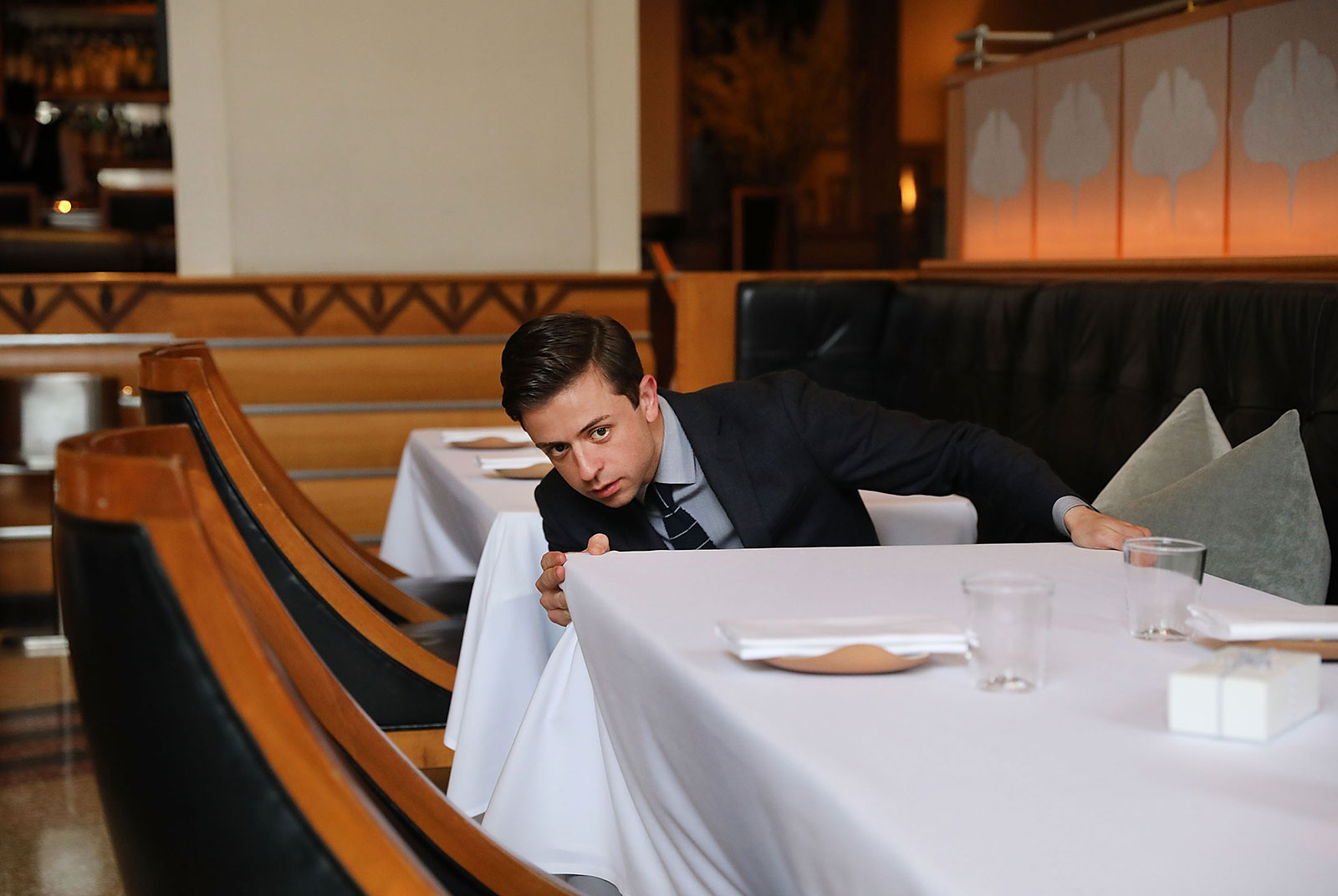
Spencer Platt / Getty Images
By the time her meal was over, Dias had decided she wanted to apply to EMP for her externship — a temporary, entry-level kitchen job required by many culinary schools to help graduating students gain experience and valuable industry connections. After the staff found out she was a vegan culinary student, one of the chefs even gave her their business card.
So it was a shock when, just three days after Dias’ visit, Eleven Madison Park chef and owner Daniel Humm announced that the restaurant would be adding a limited amount of meat and dairy back to the menu — say, an optional cameo of lavender-glazed duck here, an if-you-want-it lobster course there — starting in October 2025. Humm told The New York Times that the change was meant to attract a wider base of guests, both for financial reasons and to reflect a hospitality philosophy of wanting to welcome everyone.
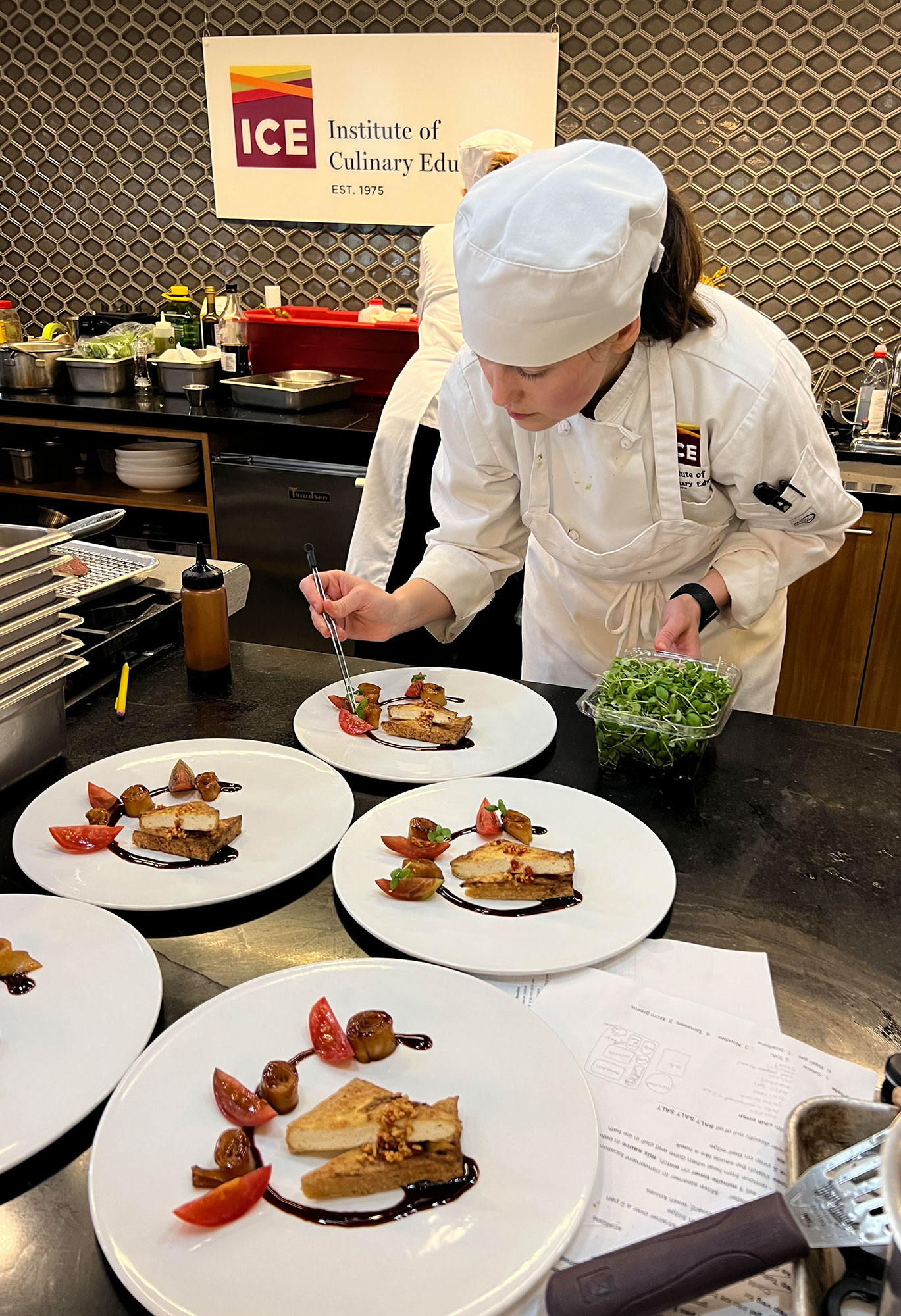
As the news spread, concern grew among the members of Dias’s cohort at the Institute of Culinary Education, where she was enrolled in a program geared toward vegetarian and vegan chefs. Just the day before, one of her classmates, Autumn Henson, had sent their completed externship application to the institute’s career adviser to forward to the restaurant. An experienced vegan baker, Henson had wanted exposure to plant-based haute cooking at a place with name recognition: “It’s important that there’s [vegan] representation at all levels,” they explained.
But as soon as Henson heard the news, they rushed to a computer and quickly shot off a follow-up message. “The subject line was, ‘Don’t send in my application to EMP.”
Likewise, Dias decided to put aside her partially finished EMP externship application and look for employers with a fully vegan menu. “The options for if you want to do plant-based fine dining are few and far between, and getting fewer,” she said.
Even before Eleven Madison Park’s menu change, opportunities to train in exclusively plant-based, high-end kitchens were scarce. The short list of such restaurants in New York City — a city with more vegan and vegan-friendly restaurants than anywhere else in the country — already meant cooks like Dias and Henson have a harder time finding their place within the ultra competitive food industry. As more elite kitchens step back from fully plant-based cooking, the ripple effects go beyond individual careers: Fewer chefs trained in plant-based techniques means fewer restaurants able to execute them at a high level, and fewer chances for plant-forward dishes to shape what ends up on menus more broadly.
At a moment when experts say cutting back on meat and dairy is essential to a sustainable diet, the loss of these training grounds could slow the cultural shift needed to make that future feel both desirable and delicious.

Even for more established vegan cooks, part of what made Eleven Madison Park’s return to meat so upsetting was that it had once represented the ultimate achievement for sustainable cuisine, the ascent to the top of the American cultural food chain.
Within the world of fine dining, vegan kitchens share many of the same hallmarks as traditional haute dining establishments — prix fixe menus, meticulous presentation, premium ingredients, and a price tag that’s typically north of $100 per person (before drinks!). And yet the concept of a luxurious, formal, plant-based meal is still a culinary outlier in many parts of the United States, with many top-tier restaurants only emerging within the last few decades.
Like the Michelin star system itself — a rating guide that has become the go-to barometer for ranking the world’s best restaurants — special occasion food has historically been dominated by French culinary tradition, which is heavily reliant on meat and dairy. The 1960s through 1980s saw the rise of nouvelle cuisine, a lighter style of French cooking that emphasized simplicity and freshness and ditched heavy sauces, yet remained firmly tied to animal products.
That’s not to say delicious vegan fare didn’t exist, of course. Yet in popular culture, it was largely associated with healthful self-denial. In many restaurants, diners who eschewed meat often found themselves poking at plates of steamed vegetables over brown rice — hardly cause for gastronomic celebration.
But in the early 1990s, that started to change. Millennium Restaurant in the San Francisco Bay Area was an early pioneer of upscale vegan cooking when it opened in 1994, offering world cuisine-influenced dishes like tempeh glazed with Filipino-style banana barbecue sauce and a cornmeal-crusted maitake mushroom over grits drizzled with Calabrian chile sofrito oil. In the late aughts, vegetarian fine dining restaurant Dirt Candy in New York City gained national acclaim for its trailblazing playfulness with vegetables, like sweet cauliflower chilaquiles for dessert. Next came Vedge in Philadelphia, Crossroads Kitchen in Los Angeles, Avant Garden in New York, and other elevated vegan restaurants that helped nudge plants from the appetizer menu to the main course in the 2010s.
Then came the COVID pandemic. While American restaurants in general struggled, interest in plant-based diets peaked. During the pandemic, the plant-based food industry expanded by 27 percent, according to a survey conducted by the consumer group Strategic Market Research. Whether they were motivated by concerns over health, the climate impacts of meat and dairy, or the ethics of consuming animal products, increased consumer demand for plant-based products could be seen in grocery aisles and white tablecloth restaurants alike.
But it wasn’t until Eleven Madison Park’s 2021 divestment from meat and dairy that vegan fare became associated with the ultimate level of culinary luxury, which has since come to also include other plant-based dining destinations such as Fabrik in Austin, Texas; Astera in Portland, Oregon; and Michelin-starred MITA in Washington, D.C.
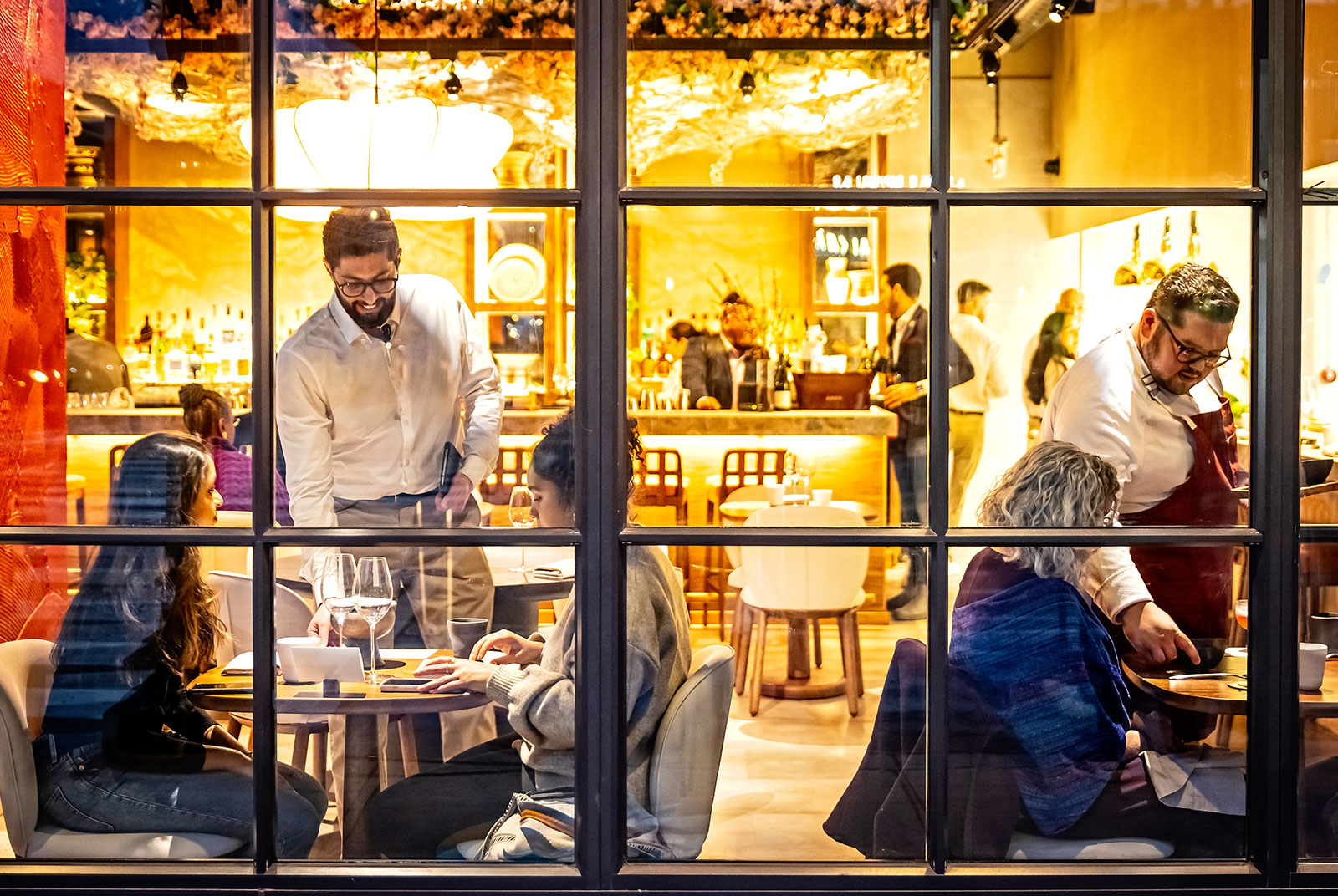
For the last few years, upscale vegan restaurants have provided new training grounds for the next generation of vegan chefs and bakers, many of whom have taken those plant-based lessons beyond the haute dining scene.
Internships and externships in vegan fine dining kitchens teach budding plant-based cooks things that omnivorous kitchens teach, too — like how to chop vegetables on a very, very, very even dice — which you can either call fundamentals or grunt work. (Both descriptions are true.) But these experiences also usually teach some of the skills that are especially important for vegan haute cookery.
More so than meat dishes, cooking fine plant-based fare requires an advanced understanding of what ingredients are at the peak of their season and ripeness, and how to prepare them in ways that accentuate their flavor, said Dan Marek, director of plant-based culinary and content development at Rouxbe Online Culinary School. Cooks training in haute vegan restaurants might gain specialized skills that are highly tailored to the chef’s approach or to the cuisine the restaurant serves. If they’re at a fancy vegan sushi place, they might learn how to roll vegan sushi. Elsewhere, maybe they’d learn spherification, a molecular gastronomy technique that forms tiny, liquid-filled pearlettes that look like caviar but can taste like anything — Key lime, passionfruit, a peak September tomato.
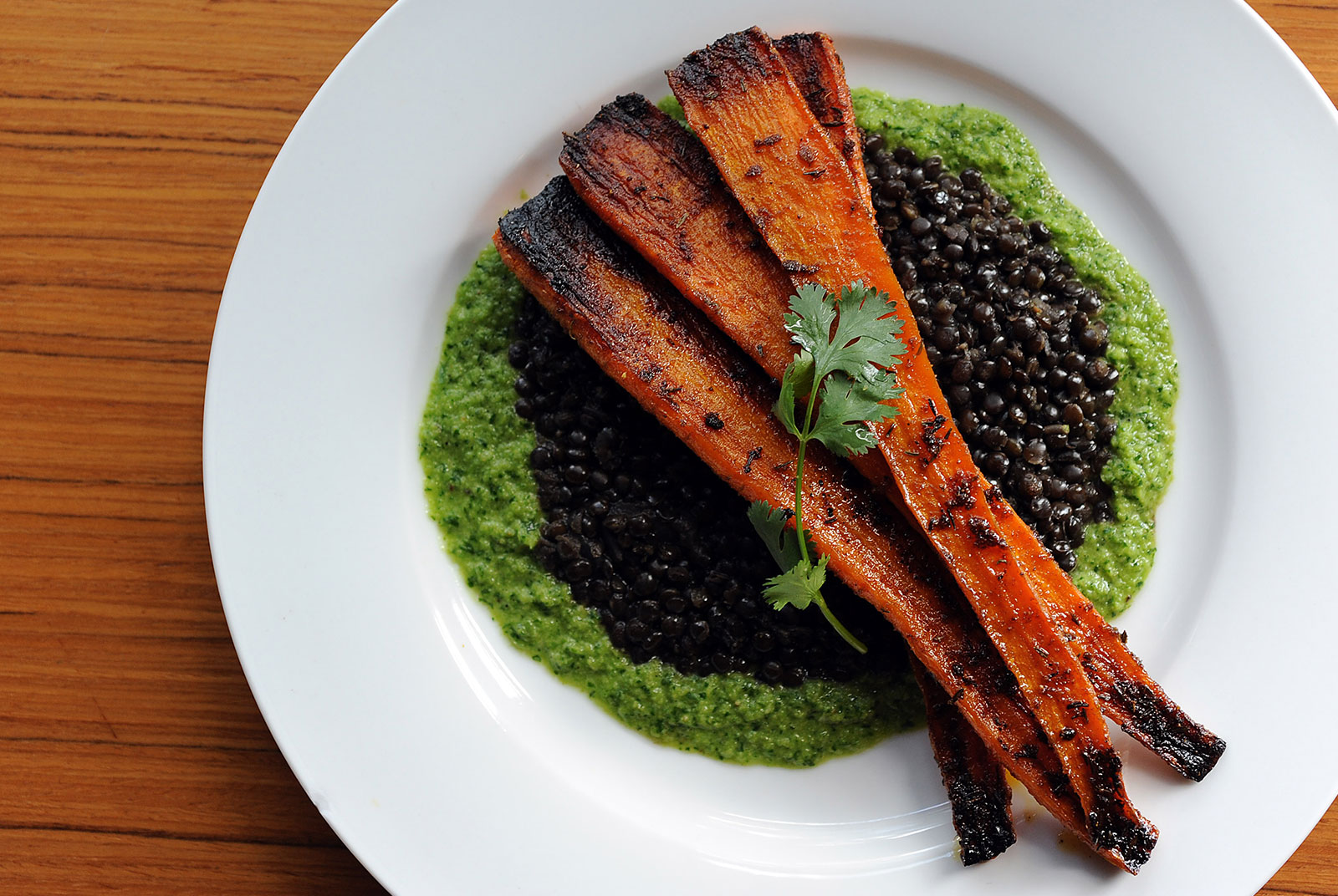
Astrid Riecken for The Washington Post via Getty Images
At the pastry station of many high-end vegan kitchens, pastry cooks need to be versed in using plant-based baking substitutes, especially butter. Ricotta of Manifold Bakery said his internship at Eleven Madison Park helped him grasp the importance of using acidic ingredients and generous amounts of salt to heighten flavor, plus exposed him to vegan substitutes and thickeners — part of what he believes sets apart his plant-based baking style today.
“All that came from my time there,” he said. Ricotta said that if he were seeking an internship today, the presence of meat on the restaurant’s menu wouldn’t dissuade him, so long as the pastry program remained fully vegan. Eleven Madison Park says it will “at this time.”
Vegan fine-dining chefs who stay in that part of the field and open their own restaurants also need to eventually learn, or at least consider, the extra element of performance that some restaurants leverage to help vegetable-only dishes feel worthy of a lofty price tag. Eleven Madison Park brought that to the plant-based culinary scene with dishes like its famous carrot tartare, ground at the table and mixed up by the diners themselves, like a big, playful wink at steakhouse expectations.
But for all its innovation in the kitchen, plant-based eating recently began showing signs of trend fatigue. Meat is making a cultural and political comeback in America. Carni-bros, farm-to-table acolytes, and people looking for easy, protein-filled weeknight recipes alike are on the bandwagon. In January, Health and Human Services Secretary Robert F. Kennedy Jr. released updated federal dietary guidelines that championed red meat and dairy in a major reversal of previous recommendations.
It wasn’t the ideal professional landscape for Dias and Henson, as they looked for other plant-based externship options in New York last August. Going down the list of high-end plant-based restaurants in New York, they discovered their options were rapidly dwindling. In 2025, at least 20 well-known vegan restaurants in the city closed permanently, two others closed temporarily, and another two, including Eleven Madison Park, de-veganized.
While restaurant turnover is part of the food industry, it’s notable that most of the recently shuttered vegan businesses in New York are not being replaced by new vegan eateries. Marek attributes a broader nationwide contraction to an overly saturated market: The U.S. restaurant scene got to a point where there were more plant-based eateries than the market of vegan and vegan-curious eaters could actually support. “We’re seeing a lot of closures in the past year,” he said — more than can be attributed to the inherent challenge of targeting a niche clientele.
“The bigger the swell, the bigger the fall.”

Though the vegan restaurant scene has shrunk compared to its post-pandemic high, it’s by no means gone. There are still about a dozen high-end meatless restaurants in the Big Apple alone. A few — like Dirt Candy, Bodai, and Omakaseed — are formal fine dining, centered on tasting menus. Others, like abcV and Avant Garden, are upscale, with enough gastronomic ingenuity to be listed on the Michelin guide. Dirt Candy is the lone one in the bunch with a Michelin star, one of just a few meatless restaurants nationwide with the honor.
Before applying to Eleven Madison Park, Dias had applied to almost all the city’s high-end vegan kitchens, including Omakaseed and the vegan restaurants owned by the groups Overthrow Hospitality and City Roots Hospitality. But by the end of August, she hadn’t gotten any replies. She decided to look beyond the city’s entirely plant-based upscale options, applying to abcV, which is vegetarian and is owned by renowned French chef Jean-Georges Vongerichten’s restaurant group. The restaurant’s use of some eggs gave Dias pause, but abcV is still considered vegan-friendly. She really admired its approach to letting vegetables be vegetables instead of leaning on meat substitutes.
“It’s like school. Sometimes the benefits outweigh whatever I may feel,” she said.
Henson, meanwhile, had also sent an externship application to Overthrow Hospitality, which owns Avant Garden and the elevated homemade pasta spot Soda Club among others, but didn’t hear back. (Overthrow Hospitality later told Grubstreet that it plans to close almost all of its New York City restaurants “over time” in favor of launching a national chain of pizza-and-pasta locations.) After inquiring about City Roots Hospitality, they learned the vegan group doesn’t take externs. After doing a trail (or job tryout) at both abcV and Dirt Candy — two restaurants they were excited about — they learned that Dirt Candy’s sole externship spot had gone to another plant-based student in their culinary class.
“I gotta say, it’s been a little harder than I thought,” they said to Grist about a month into their search.
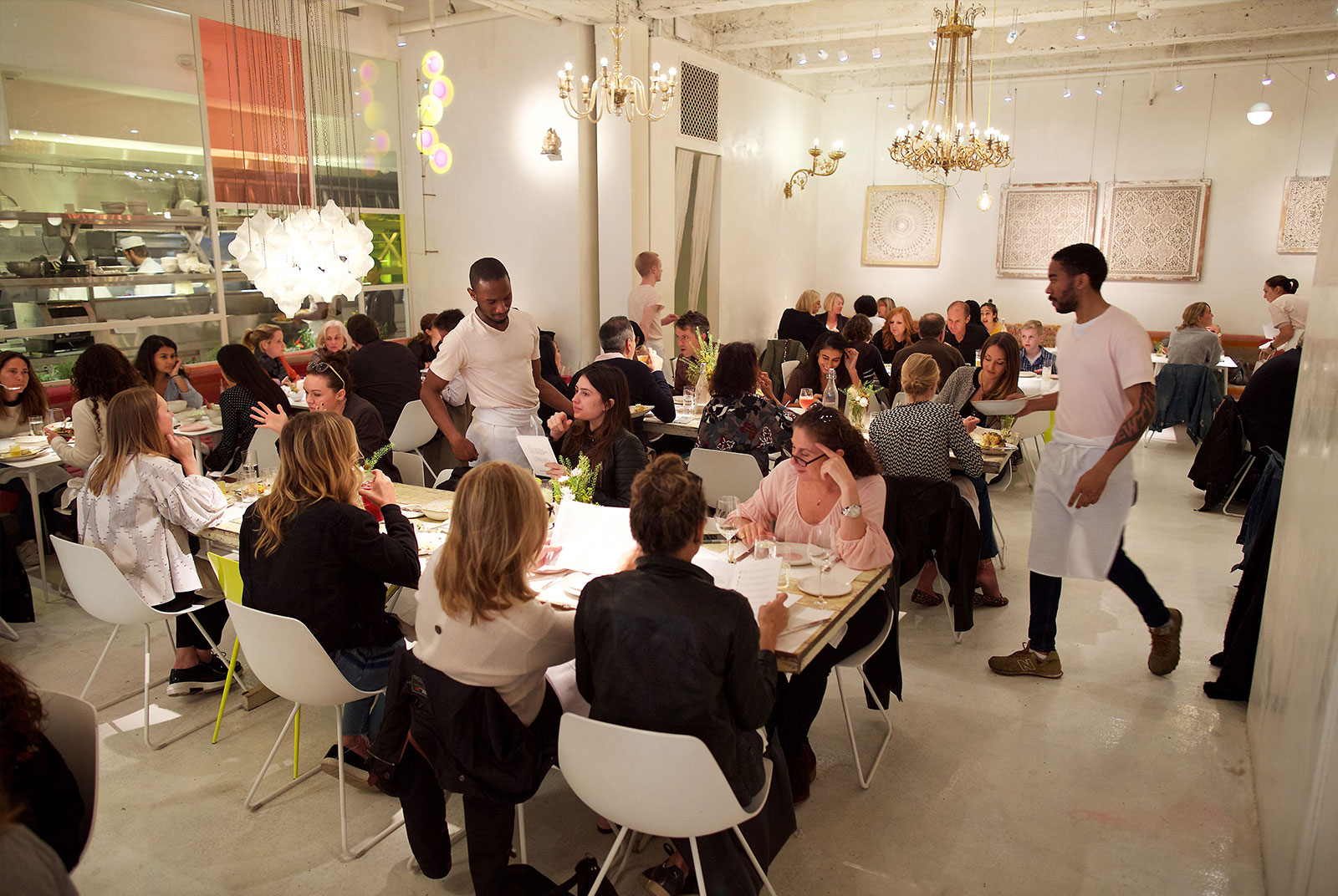
Outside the U.S., plant-based fine dining and training pathways into it for budding vegan chefs look like they may actually be expanding, inch by inch — even in France, of all places. Arpège, a three-Michelin-starred restaurant in Paris helmed by chef Alain Passard, said last summer that it would ditch all animal products except honey. The French culinary school Le Cordon Bleu, meanwhile, has launched plant-based cooking and pastry programs at its Paris, London, Malaysia, São Paolo, and other locations over the past several years.
But inside the U.S., the spotty landscape of meatless culinary school training opportunities just took a hit. While Henson and Dias were still in classes at the Institute of Culinary Education, they learned that their program, which had been entirely vegetarian, would be changing beginning with the following cohort. A previous iteration of the program had been plant-forward but with some instruction in poultry and seafood — taking inspiration from the shuttered vegetable-centric culinary education pioneer the Natural Gourmet Institute. Last fall, the institute’s vegetarian program reverted back to this model, reincorporating a few lessons with chicken, fish, and shellfish.
That shift may not matter much for early-career cooks who are flexible on the presence of meat in their educational program. It might even be helpful for broadening their career opportunities, since they’d be well-poised for work in a vegan kitchen but could also walk into a traditional kitchen knowing how to filet a fish. Vegan or plant-forward chefs who are OK with the presence of meat in their work environment have more places to do haute vegan cooking than those who draw the line at steak. There are 20 or so Michelin-starred omnivorous restaurants around the country that offer dedicated vegan or vegetarian tasting menus — The French Laundry, Le Bernardin, Per Se, and now Eleven Madison Park among them. Many more without a Michelin star do the same. The field of vegetable-centric restaurants that serve meat is much larger.
But for vegan chefs like Dias and Henson who really want to avoid meat due to their personal convictions, shifts like the ones at Eleven Madison Park and the Institute for Culinary Education make it harder to see themselves in the field at all. The U.S. now has only one major professional culinary school offering a vegetarian culinary diploma in person — the Auguste Escoffier School of Culinary Arts in Boulder, Colorado. (Escoffier didn’t respond to requests for comment about whether it has any plans to incorporate more animal products into its in-person or online program.) Marek said Rouxbe’s online programs, which he described as “1,000-percent vegan,” aren’t going anywhere.
While Dias and Henson were willing to apply to vegetarian externships, both said that they wouldn’t have attended the Institute for Culinary Education at all if their program had included poultry and seafood. “I feel kind of lucky that I got in while it was still meat-free,” Henson said.
That wasn’t Henson’s only break. In late September, they finally received an externship offer — from abcV, the same restaurant where Dias was training — with a starting date in early October.
A few days into the role, Henson started running the restaurant’s dosa station solo. Dias, who started a few weeks earlier, had recently learned how to make abcV’s Sichuan tomato broth for her favorite dish — wontons filled with late-summer sweet corn and shiitake mushrooms. She was getting additional instruction in how seasonality figured into the design of a tangy heirloom tomato salad served with fruit. She watched how the chefs chose different fruits to include, depending on what they got from the farmers market.
“It’s always so beautifully presented,” Dias said.
In mid-November, Dias finished her externship, which she called “very enriching.” Between her time at culinary school and abcV, she felt ready to move forward with her dream of menu consulting, developing vegan recipes for omnivorous restaurants, beginning with her family’s. By December, she was back in Brazil, feverishly developing plant-based dishes for a new pan-Asian bar-restaurant her family was opening before Christmas.
Henson’s time at abcV looked a little different. They ended up staying at the dosa station for the entirety of their two-and-a-half-month externship due to what they described as “worker shortages.” When their training ended, they decided to leave haute cuisine and continue their vegan bakery business in California, with the goal of eventually scaling it up to wholesale.
Reflecting back on their externship, Henson was glad they’d done it but had mixed feelings about its utility. The experience had given them new skills, including familiarity with new produce and herbs — helpful knowledge for developing their own future vegan pastry flavors. But compared to culinary school, which had given them more breadth of knowledge, they weren’t sure it had been truly necessary. They felt it would have been essential — probably more so than school — if they had gone into actual restaurant work, fine dining or otherwise.
In the end, Henson saw their externship less as a prerequisite than as one narrow path among too few.
Fine dining has long functioned as a testing ground for ideas that eventually reach far beyond white tablecloths and Michelin stars. Techniques, flavors, and expectations incubated in elite kitchens tend to migrate outward, influencing what other restaurants attempt and what diners come to want. As fewer of those kitchens commit fully to plant-based cooking, the question isn’t only where vegan chefs will train. It’s whether the knowledge needed to make vegetable-centered food feel ambitious, indulgent, and culturally central will continue to spread at all — or quietly slip off the menu.