


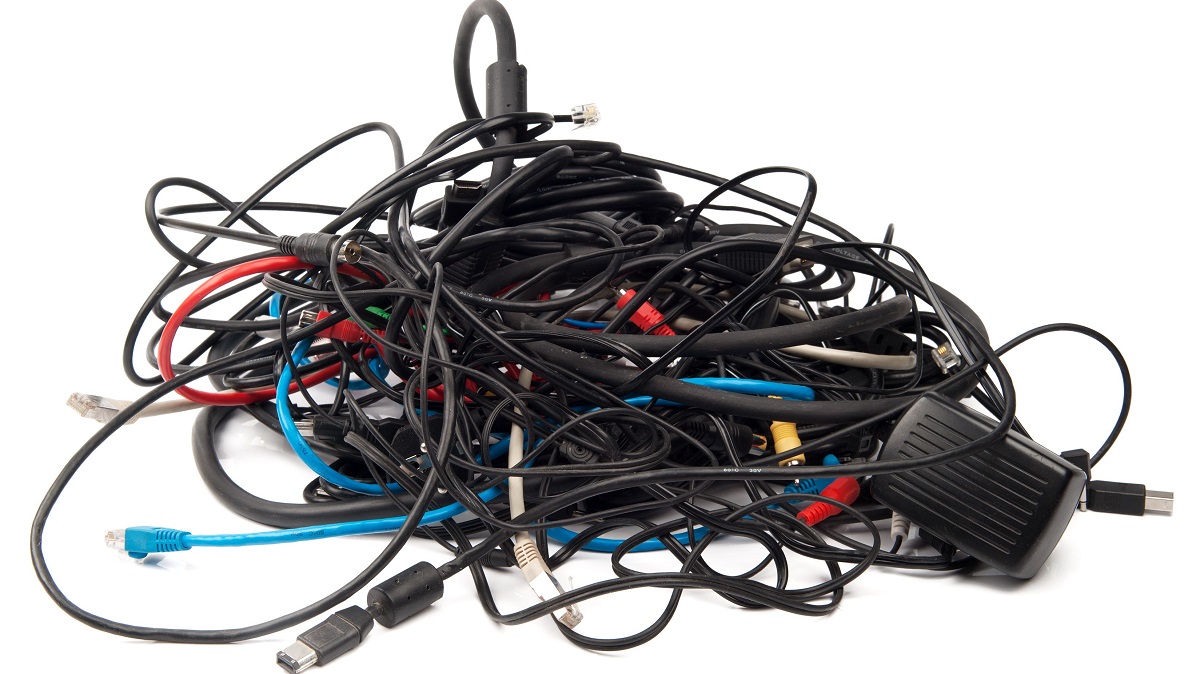
Do you have a box of old electrical wires and cables lying in a corner of your house? You’re not alone. According to the UN’s Global E-waste Monitor 2024, a record 62 million metric tons of electronic waste was generated worldwide in 2022, an 82% increase since 2010. E-waste is projected to reach 82 million metric tons by 2030. In the U.S. alone, roughly 8 million tons of e-waste is discarded each year.
Electrical construction materials, including the types of wires and cables used in your home wiring, along with the ever-growing pile of charging cords, USB cables, HDMI cables, and Ethernet cables that accumulate in drawers and boxes, make up a significant portion of this waste. But it’s important to keep electrical wires and cables out of the trash; they contain valuable resources that should be recycled.
The plastic coating on wires and cables, which can cause environmental harm, is commonly made of polyethylene or polyvinyl chloride (PVC). When exposed to extreme heat and other environmental conditions in a landfill, the plastic coating can release harmful contaminants like lead and dioxins into the environment. Power cords and extension cords are classified as “tanglers” by recycling programs, because they can jam sorting equipment, causing worker injuries and costly maintenance. They should never go in your curbside recycling bin.
Fortunately, the options for responsibly disposing of old or unused electrical wires and cables have expanded significantly. Here are seven ways to keep them out of landfills.
Retail Drop-Off Programs
The easiest option for most people is dropping off old wires and cables at a major retailer that accepts e-waste. Several national chains offer convenient recycling programs:
Best Buy remains the nation’s largest retail collector of e-waste, having recycled more than 2.7 billion pounds of electronics and appliances since 2009. Every U.S. Best Buy store has a kiosk just inside the front door where customers can drop off rechargeable batteries, wires, cords, cables, and plastic bags at no cost. You can also bring up to three items per household per day to the customer service counter for free recycling, regardless of where you purchased them. Check Best Buy’s recycling page for state-specific details, as limitations vary.
Staples offers free in-store technology recycling at the checkout counter, covering everything from desktops and laptops to peripherals like keyboards, mice, speakers, and cables. All brands are accepted, and the retailer works exclusively with e-Stewards-certified recyclers, the most rigorous standard for responsible electronics recycling in the U.S. Note that Staples has been closing some locations, so confirm your local store’s availability and accepted items before visiting by checking the Staples Recycling Services page.
Office Depot/OfficeMax offers free in-store recycling for cell phones, rechargeable batteries, and ink and toner cartridges. For other electronics including cables and wires, they sell Tech Recycling Boxes in three sizes ($22.99 for small, $18.29 for medium, $28 for large) that you fill with electronics and return to the store for processing.
Mail-In Recycling Programs
If you don’t live near a retail drop-off location or prefer the convenience of shipping from home, several mail-in options accept wires and cables:
Best Buy Technology Recycling Boxes can be ordered online and shipped to your home. A small box (9x5x3 inches, up to 6 lbs.) costs $22.99 and a medium box (18x14x4 inches, up to 15 lbs.) costs $29.99. Each comes with tape, instructions, and a prepaid UPS shipping label. Fill the box with cables, cords, keyboards, webcams, and other small electronics, then take it to a UPS drop-off location or schedule a pickup. Best Buy’s recycling partner handles data destruction and responsible recycling.
Homeboy Electronics Recycling offers mail-in recycling kits that include prepaid shipping and R2-certified processing. Their accepted items include cords and wire, cable and streaming devices, and a wide range of other electronics. As a social enterprise affiliated with Homeboy Industries, purchasing a kit also supports job training and employment opportunities for formerly incarcerated individuals — making it an option that addresses both environmental and social impact.
Waste Management Recycle by Mail offers recycling kits for electronics, batteries, and bulbs. Enter your address on their website to see which mail-in services are available in your area.
Brand Take-Back Programs
Several major manufacturers offer take-back and recycling programs that accept cables and accessories:
Apple provides free recycling of devices and accessories, including cables, chargers, adapters, cases, and other peripherals, at any Apple Store or by mail. Visit Apple’s Trade-In website to request a prepaid shipping label and send your old accessories at no cost. The company uses advanced disassembly robots to recover valuable materials, such as aluminum, cobalt, and rare-earth elements, for use in new products.
Dell Reconnect, a partnership with Goodwill Industries since 2004, provides free recycling at more than 2,000 participating Goodwill locations across 44 U.S. states. The program accepts any brand of computer equipment and accessories — including cables, keyboards, mice, and speakers — in any condition. Over 20 years, Dell Reconnect has recovered and recycled more than 635 million pounds of electronics. Materials are processed through Dell’s open-loop recycling system, where recovered plastics and metals are reintroduced into new products. Dell also offers a free Mail Back program for consumers who prefer to ship their old electronics directly.
Sell
You may be able to find buyers for your old electrical wires and cables. There are many technology enthusiasts and makers who hang on to old gadgets or develop unique new systems. Your old charging cord may be just the type of cable they’re looking for. Try listing what you have on Craigslist, Facebook Marketplace, or eBay.
Most metal recycling centers accept old wires and cables for the copper and aluminum they contain. Copper, in particular, is highly valuable; roughly $8 billion worth of copper was recycled in the U.S. in 2021. Some recyclers may accept only stripped metal wire, requiring you to remove the plastic insulation first. If you have a substantial quantity of cabling, electrical liquidators may also be interested in purchasing your materials in bulk.
Reuse
Before recycling, consider whether your old wires and cables can be reused. Many charging cords and cables work with multiple gadgets, especially now that the USB-C standard has become widespread across Android phones, tablets, laptops, and other devices (and even Apple’s newest iPhones). Keep a backup charging cord handy, and offer extras to family members or friends.
If you don’t know anyone who needs them, post your cables for free on Freecycle or local Buy Nothing groups on Facebook so someone else can put them to use.
Donate
Schools and nonprofits running STEM programs often welcome donations of cables, chargers, and other electronic accessories for student projects and labs. Local charities, community centers, and shelters may also need working chargers and cords for the people they serve. A quick call to local organizations can help you find recipients who can use what you no longer need.
Recycle Through Local E-Waste Programs
If none of the options above are convenient, check your local municipality’s e-waste recycling program. Many cities and counties operate dedicated e-waste recycling facilities or host periodic collection events — often around Earth Day or during spring-cleaning season.
Some states have enacted specific e-waste legislation that makes recycling easier. Programs like E-Cycle Washington and California’s Covered Electronic Waste Recycling Program offer free drop-off options for residents.
Renew Your eWaste
With less than a quarter of global e-waste being properly collected and recycled, there’s an enormous opportunity for individuals to make a difference. The metals embedded in the world’s annual e-waste, including copper, gold, iron, and rare earth elements, are valued at approximately $91 billion, according to the UN’s E-waste Monitor. Every cable and cord you recycle contributes to recovering these valuable materials rather than burying them in a landfill, and helps prevent toxic substances from contaminating soil and water.
Old wires and cables should never go in the trash or the curbside recycling bin. With retail drop-offs, mail-in programs, brand take-back initiatives, and local e-waste recycling options now widely available, there’s a responsible option for every situation, often at no cost.
Editor’s Note: Originally published on October 15, 2020, this article was most recently updated in February 2026.