


Economy
/
January 19, 2026
New York City is suing a delivery app for stealing workers’ pay—signaling that under Mamdani, gig companies can no longer break the law with impunity.
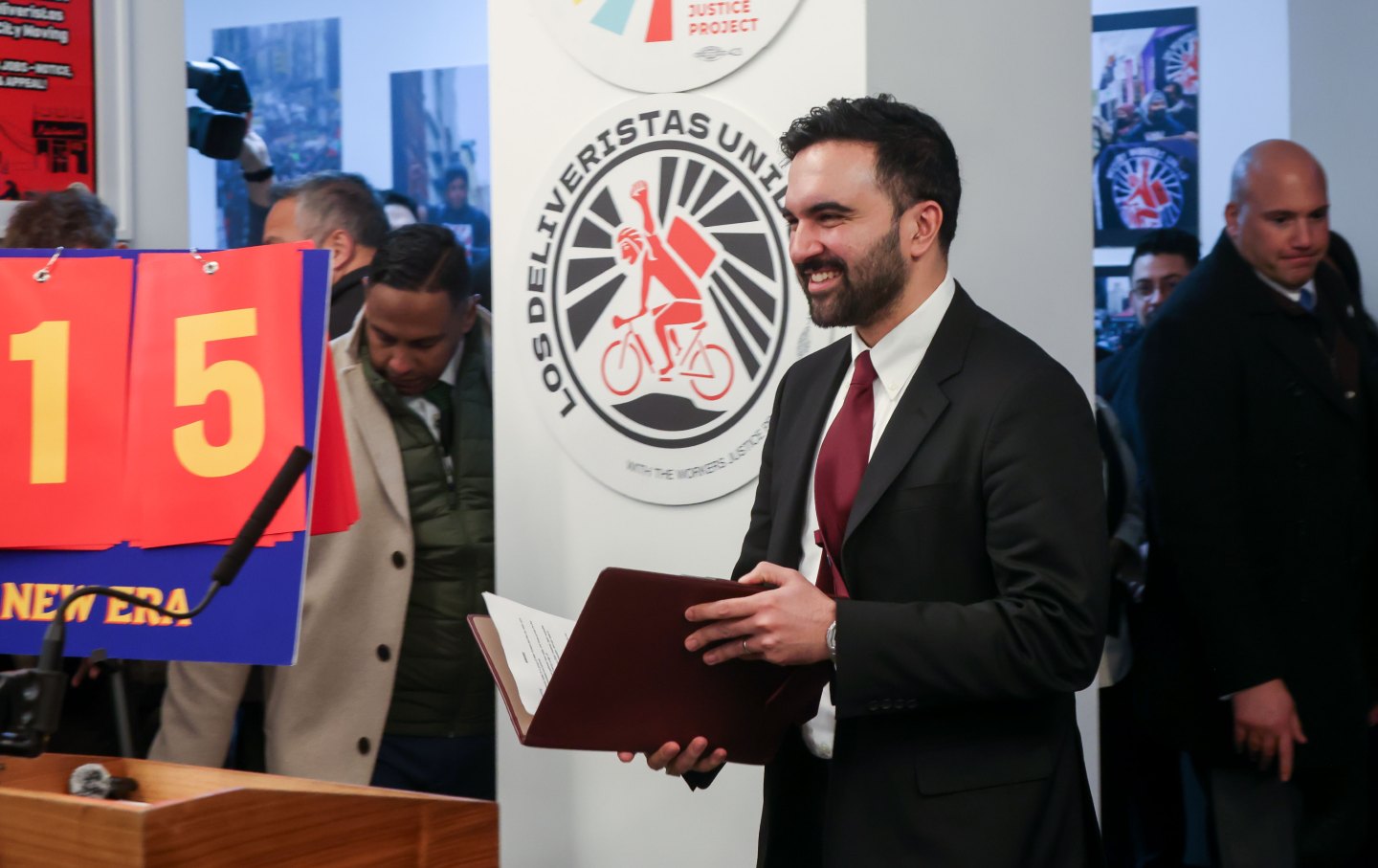
Zohran Mamdani, mayor of New York City, steps up to a podium during a news conference in Brooklyn borough of New York on January 15, 2026.
(Michael Nagle / Bloomberg via Getty Images)
Inside the office of the nonprofit Worker’s Justice Project in Brooklyn, Gustavo Ajche pulled up a screenshot on his phone. It showed the delivery app Motoclick had paid him $6.75 for three hours of work in November 2024—a fraction of the city’s $19.56 minimum hourly rate for delivery workers at the time.
“They keep you waiting for hours, and sometimes you don’t make any money for the work you put in,” said Ajche, an immigrant from Guatemala and member of Los Deliveristas Unidos, a delivery workers group.
Ajche, 41, is one of 20 workers who filed complaints with the city’s Department of Consumer and Worker Protection (DCWP), the agency that enforces labor standards for delivery workers.
Current Issue
On January 15, the city administration filed a lawsuit against Motoclick and its CEO, Juan Pablo Salinas Salek, based on those complaints, seeking to shut down the company’s operations entirely.
The lawsuit accuses Motoclick, which connects restaurants with delivery workers, of stealing millions from workers through illegal fees and wage violations. The company charged workers $10 penalties for canceled orders and deducted the full cost of refunded meals from their paychecks—in some cases claiming workers owed the company money.
The action marks one of the first major enforcement moves under Mayor Zohran Mamdani, who took office January 1 after campaigning on worker protections and affordability.
Speaking to The Nation, Mamdani said, “The goal here is to ensure that working-class New Yorkers look to the government as an entity that can actually help them in their day-to-day struggles and one that will hold accountable those who are breaking the law.”
“Too often for delivery workers, the city government has at best overlooked them. What we want to show is that their well-being is of our concern and that the law matters no matter who is breaking it.”
A key part of that, he said, “is using the tools of city government to stand up for working people wherever they are being taken advantage of.”
DCWP Commissioner Samuel Levine, who announced the lawsuit alongside Mamdani, said the city would pursue an aggressive enforcement strategy. “We are seeking to shut down this company, and other predatory apps should be on notice,” he said. “Even if the company doesn’t have the money, we hope to prevail in the lawsuit to get a judgment against the CEO and hopefully recover assets,” he said.
“New Yorkers who speed in the park illegally get tickets. I don’t know why executives should have immunity when they break the law,” he said.
Levine, who previously led the Federal Trade Commission’s Bureau of Consumer Protection under the Biden administration, has wasted little time since taking charge. Earlier in the week, his department released a report showing DoorDash and Uber changed their apps in December 2023 to make tipping harder for customers—moving the tip option to after checkout rather than during the ordering process.
The average tip on Uber and DoorDash is currently 76 cents per delivery, according to the report. On rival apps that kept tipping at checkout, the average tip is $2.17 per delivery. The report estimated that the interface changes cost workers $554 million in tips.
Workers like Ajche who complained about Motoclick described violations far more egregious than withheld tips.
Alejandro Grajales, 36, another complainant, alleged that the company flouted the city’s minimum wage and distance rules. “They don’t respect the minimum wage. They don’t respect the distance limits. They pay around four or five dollars for one delivery, and we have to go very far. There’s no option for the customer to give us tips, and they take 25 cents from each delivery, which adds up to a lot over hundreds of deliveries.”
Antonio Solis, 38, who also worked with Motoclick for two weeks in May 2025, estimated he lost around $100 to $200 in unpaid wages before he stopped using the app. He also mentioned the unpaid time spent waiting between deliveries which can sometimes run into hours on the app.
Popular
“swipe left below to view more authors”Swipe →
Solis and Grajales are members of Los Deliveristas Unidos, a collective of delivery workers founded in 2020. In its short history, the group has already achieved major policy wins, like the set of delivery-industry reforms they got passed in the City Council, which included a minimum base pay and a right to use restaurants’ bathrooms.
Those victories made New York’s gig economy protections among the strongest in the country—which may explain why DoorDash poured $1 million into backing Cuomo during last year’s Democratic primary.
Now the Mamdani administration is enforcing those protections—and hoping to expand them. Earlier in the week, DCWP Commissioner Levine sent warning letters to dozens of delivery apps, including Instacart, DoorDash, Grubhub, and Uber, asking them to comply with new worker protection laws taking effect January 26. The laws require apps to provide tipping options at checkout and extend minimum pay protections to grocery delivery workers. DoorDash and Uber have sued to block the tipping law.
During last year’s Democratic primary elections, DoorDash donated $1 million to a super PAC supporting Andrew Cuomo, then the front-runner in the mayor’s race. The company has now pushed back against the city’s findings, claiming in a statement released on January 13 that the change to their tipping model was suggested by the DCWP itself in a 2022 study. The company said workers are earning more overall even with lower tips, and that customers are choosing to tip less after the minimum wage for delivery workers was raised.
In an interview with The Nation, Levine contested DoorDash’s claim. “The notion that we told them to do this is absurd,” he said. “The study laid out potential scenarios the agency might face, including the possibility that companies would make it harder for consumers to tip.… That is not something DCWP wanted. It was something that the agency feared.”
“I want these companies to start following the law,” Levine said. “My hope is they actually realize they’re in a new era.”
Mamdani echoed that message, saying that his administration hopes to show that no one is above the law. “This era of impunity when it comes to profiting off of working-class New Yorkers’ lives is going to come to an end under our administration,” Mamdani said.
“Companies like Motoclick clearly believe that this is still the politics of the past,” he said. “This is still a moment where those with the least [money and power] also possess the least recourse. They are wrong.”
The Nation reached out to Motoclick for comment, but did not receive a response.
More from The Nation
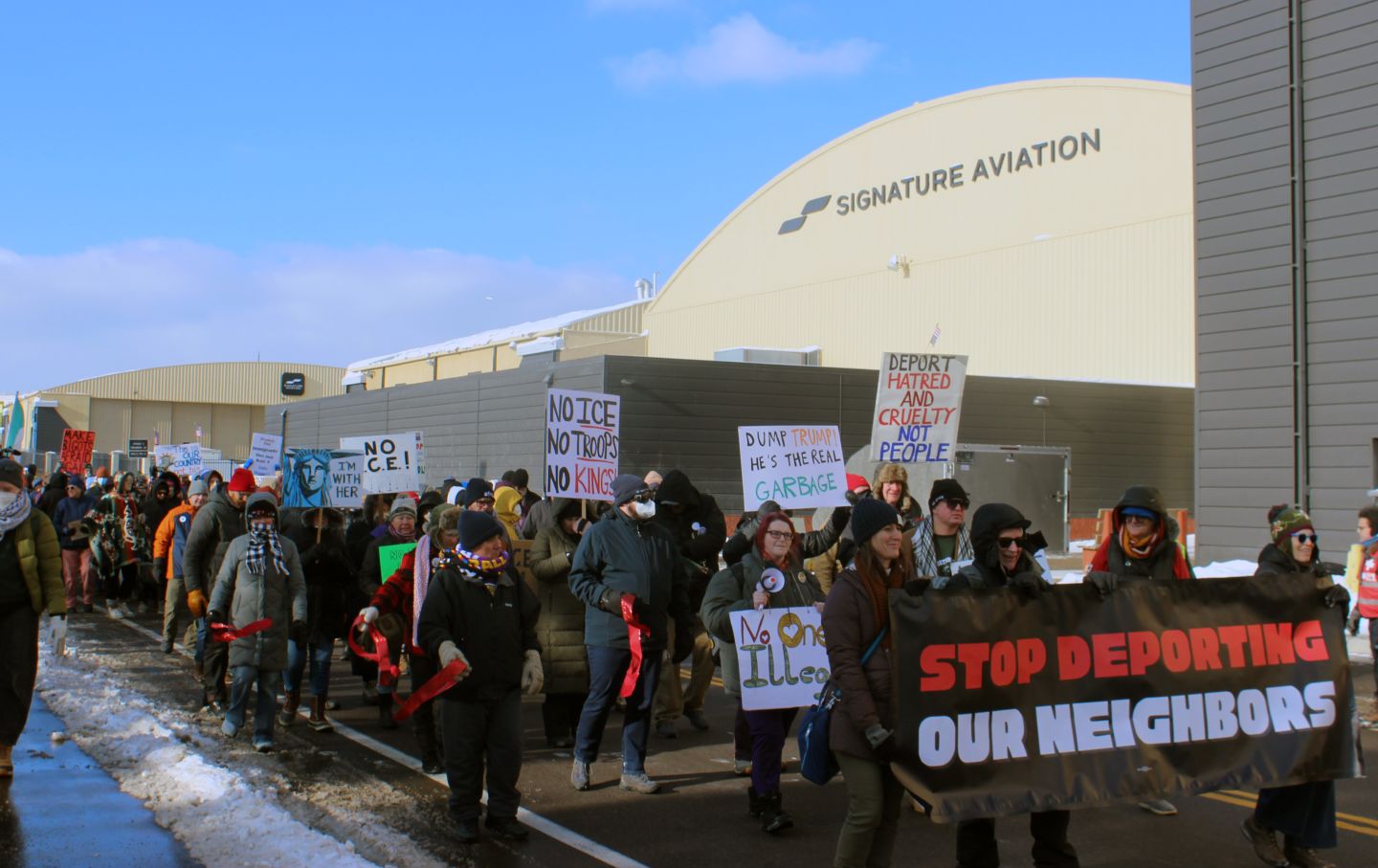
When one group of workers is terrorized or disappeared, it threatens all workers’ ability to fight for their labor rights.
Sarah Lazare

As Peter Thiel and other fat cats threaten to flee California over a billionaire tax, Khanna is calling their bluff.
Katrina vanden Heuvel
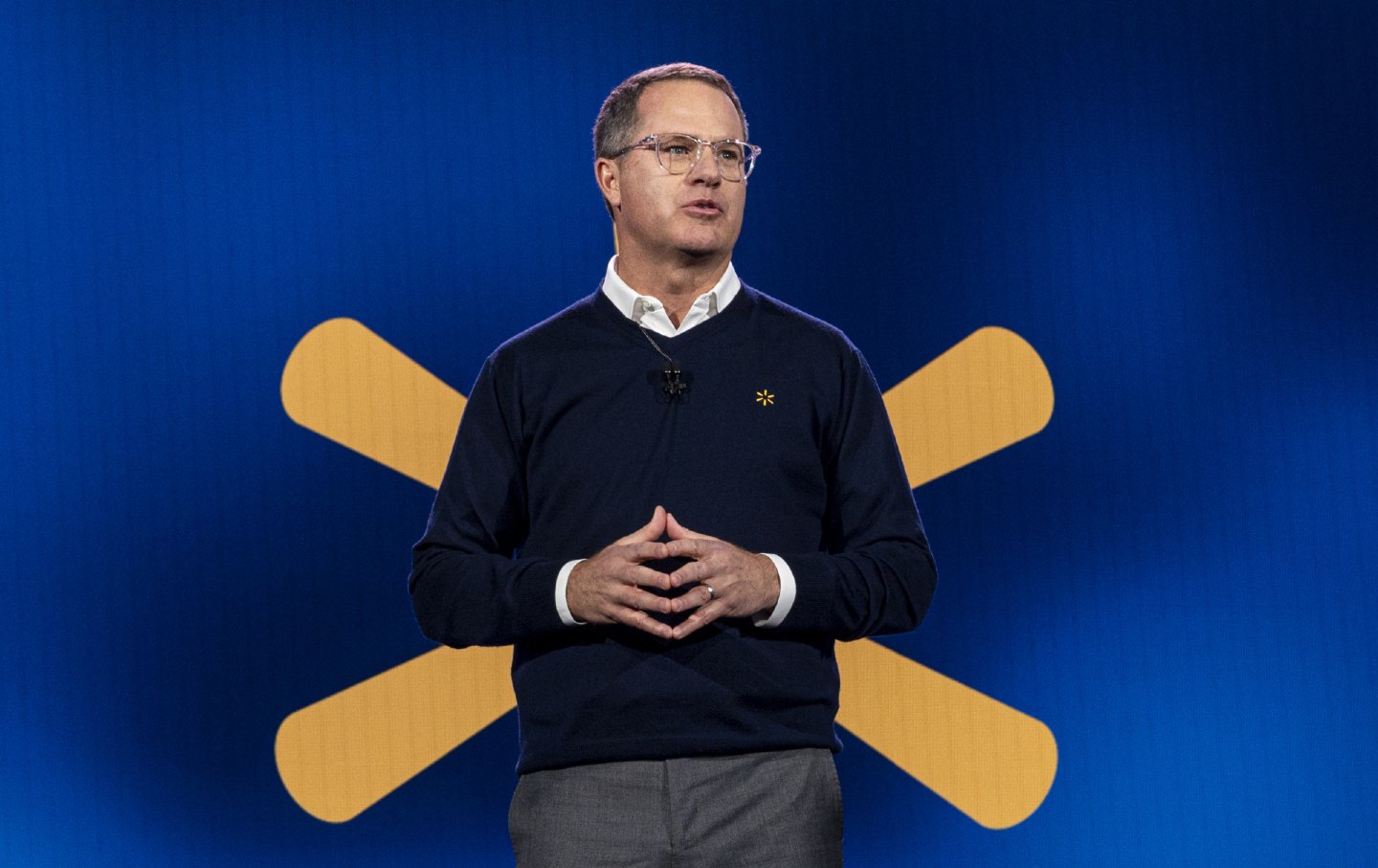
Journalists adore the CEO of the world’s largest retailer.
Michael Massing
The multibillion-dollar takeover bids targeting Warner Bros. Discovery show how Trump’s corrupt model of governance-by-payback could destroy Hollywood.
Ben Schwartz

A weeklong debauch brought together tech insiders and the leaders of a brutal monarchy to keep stoking the AI bubble.
Jacob Silverman